Choose quantity
Description :
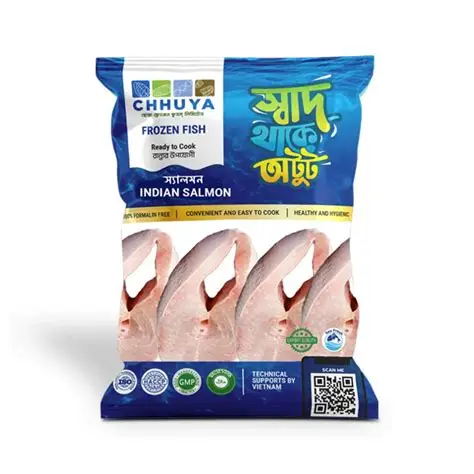
First, the thing worth clearing up: Indian salmon is not salmon. It's the trade name for a marine fish known in Bangla as lakhya, and to fisheries as the fourfinger threadfin. The name comes from the flesh, which carries a pale pinkish tint when cut — not from any relation to the Atlantic salmon you'd find in a sushi restaurant. If you're expecting deep orange fillets, this isn't that fish. What it is instead is one of the finest marine fish in the Bay of Bengal, and one of the most sought-after on this coast. In Mumbai the same fish is called rawas and treated as a delicacy. Chhuya Indian Salmon brings it as 500g of frozen steaks. What it's actually like: Rich, firm and buttery. Lakhya has a generous natural fat content that keeps the flesh moist through frying or grilling, and a flavour that's fuller and more distinctly its own than a lean fish like koral. The steaks are thick and meaty with few bones — a central bone and little else. Being a marine fish, it has none of the earthy note that pond-raised carp sometimes carries. At roughly BDT 1,350 per kilo, this is the most expensive fish in the Chhuya range, edging past koral at about BDT 1,300. How to cook it: Start with a fry. Lakhya fry is what this fish is known for on both sides of the Bay of Bengal — turmeric, chilli, salt, a light dusting of rice flour or semolina, shallow-fried until the outside crisps and the fat inside renders. It needs nothing else. Beyond that: Grilled or pan-seared — the fat protects it, so it's more forgiving under high heat than a lean fish. In a light curry — the slices hold their shape well. Shorshe lakhya — mustard paste, sharp against the richness. Baked with herbs and lemon — the fat carries continental flavours cleanly. Because there's fat in the fish, use less oil than you would for koral or tilapia. And stop cooking when the flesh turns opaque; the richness is the point, and over-cooking renders it away. Storing and thawing: Keep at -18°C. Move the pack to the refrigerator the night before you cook and let it thaw slowly — at this price, the twelve hours of planning is worth it. If time is short, keep the pack sealed and stand it in cold water, changing the water every twenty to thirty minutes. Not warm water. Pat the steaks dry before they meet heat, cook within a day of thawing, and don't refreeze. One important note: this is fish sold for cooking, not sashimi-grade fish. Despite the name, don't use it raw. Buying it Set your quantity, choose a delivery location and pay through a secure method at checkout. Into the freezer as soon as it arrives.