

Electric & Electronics
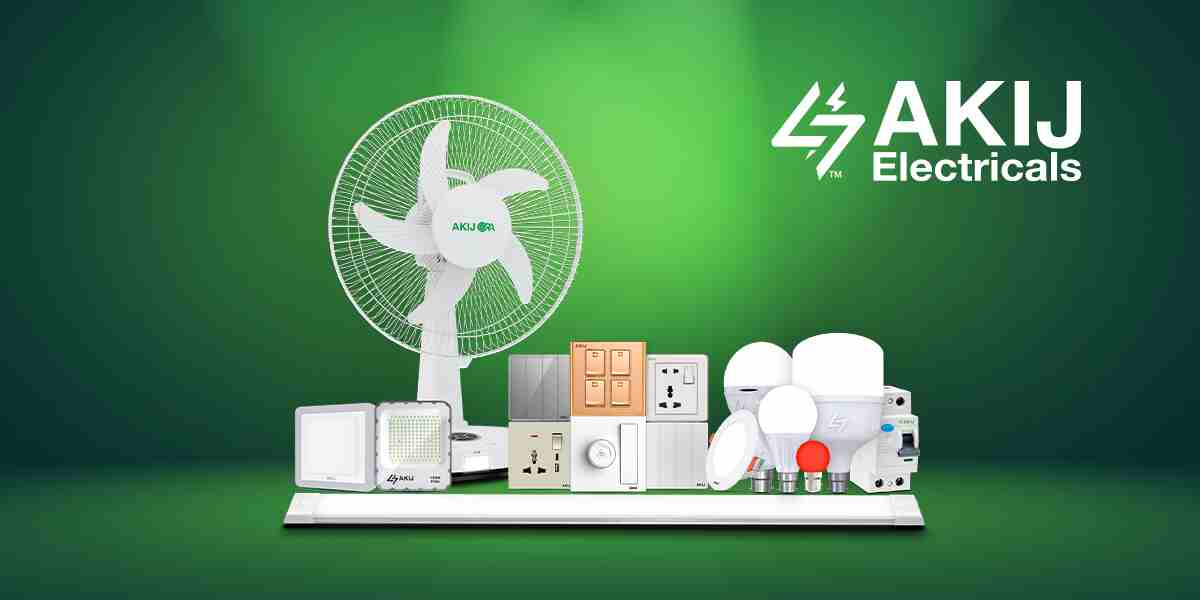
Products in Electric & Electronics

Akij Emergency Led Bulb 7W E27 DL

Akij Emergency Led Bulb 7W B22 DL

AKIJ ORA BLDC Rechargeable Stand Fan 16 Inches with romote-White

AKIJ ORA BLDC Rechargeable Table Fan 16 Inches-White

AKIJ ORA BLDC Rechargeable Table Fan 14 Inches-White

AKIJ ORA BLDC Rechargeable Table Fan 12 Inches-White
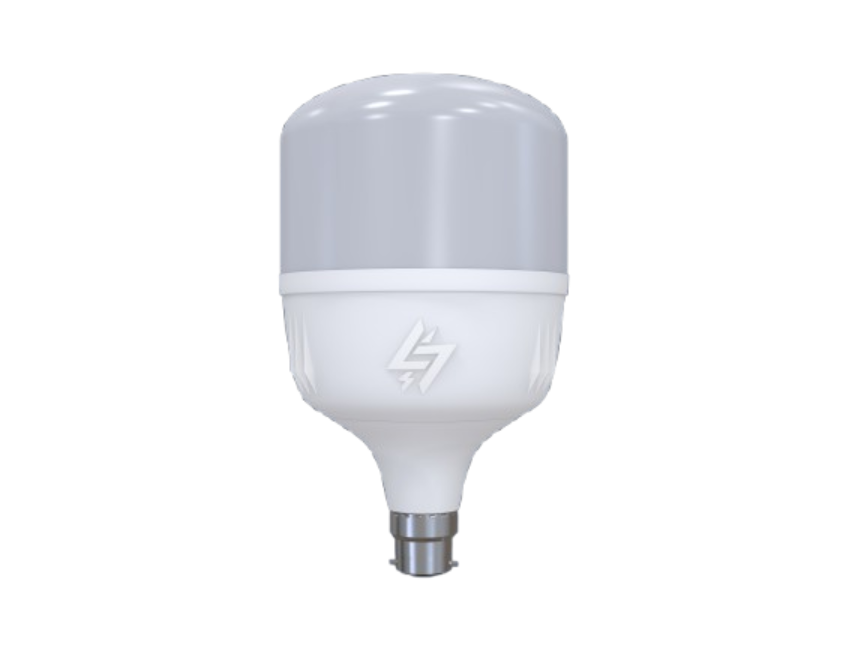
Akij Power Light AC LED Bulb 30W B22 Warm White

Akij Power Light AC LED Bulb 40W B22 DL

Akij Super Color AC LED Bulb 12W B22 Yellow

Akij Super Color AC LED Bulb 12W B22 Blue

Akij Super Color AC LED Bulb 12W B22 Green

Akij Super Color AC LED Bulb 12W B22 Red

Akij LED Panel Light Square Surface 12W DL

Akij LED Panel Light Round Surface 12W DL

Akij Emergency LED Bulb 18W B22 DL

Akij Power Light AC LED Bulb 50W B22 DL

Akij Emergency LED Bulb 12W E27 DL

Akij Emergency LED Bulb 12W B22 DL

Akij Pvc Insulation Tape Yellow

Akij Pvc Insulation Tape Black
Description :
Electrical goods are bought on an electrician's recommendation, in an emergency, or when something has failed — and almost never with time to research. Which is a pity, because three or four details decide whether what you buy actually works for you, and all of them are printed on the box.
What the range covers
LED bulbs and panel lights, emergency bulbs with built-in batteries, rechargeable table and stand fans, wall switches and socket outlets, circuit breakers, and electrical accessories.
Most of it comes from Akij Electricals, across several series.
B22 or E27 — get the base right first
This is the detail people most often get wrong, and it's the one that makes a bulb unusable rather than merely unsuitable.
B22 is a bayonet cap:
Two pins on the side of the base; you push it in and twist a quarter turn. It's the traditional fitting across most of Bangladesh and India.
E27 is a screw cap:
No pins; you screw it in. Common on imported fittings, lamps and newer installations.
They are not interchangeable and no adapter is a good substitute. Before ordering, look at the bulb you're replacing — or at the empty holder — and check which it is. Two pins means B22; a spiral thread means E27.
Most bulbs in this range are available in both, so it's a matter of selecting correctly rather than compromising.
LED wattage is not incandescent wattage:
The second most common mistake, and it works the opposite way to what people expect.
LED bulbs produce far more light per watt than the old filament bulbs, so the numbers don't translate. A 12W LED is roughly equivalent to a 100W incandescent bulb; a 40W LED is brighter than almost anything most households used before.
So buying "the same wattage as before" gets you a bulb far dimmer than you wanted. The usual result is a room that feels gloomy and a second trip to replace bulbs that were bought correctly as LEDs but chosen on the wrong scale.
A rough guide for a domestic room:
A small bedroom or bathroom is usually well served by something in the 9W to 12W range, a living room by 15W to 20W, and a large room, shop or workspace by 30W upward.
If a fitting is dimmable, check the bulb is too — most standard LEDs aren't, and using a non-dimmable bulb on a dimmer circuit causes flickering and shortens its life.
Daylight or warm white:
The abbreviations on these listings are worth decoding, because they describe the colour of the light rather than its brightness.
DL — daylight:
A cool, white, slightly blue light. It reads as bright and clean, and it suits kitchens, bathrooms, workspaces, shops and anywhere you're doing something that needs clarity.
WW — warm white:
A softer, yellower light, closer to the old filament bulbs. It suits bedrooms, living rooms and dining areas, where the point is comfort rather than visibility.
The same wattage in each looks different. Daylight tends to read as brighter even at identical output, because of how the eye responds to cooler light — which is why a warm white living room can feel underlit when the bulb is actually correct.
Coloured bulbs:
Red, blue, green, yellow — are a different thing again, for decorative and event lighting rather than general illumination.
One practical rule:
Keep the colour temperature consistent within a room. A ceiling light in daylight and a lamp in warm white next to each other looks like a mistake, because it is one.
Emergency bulbs, and how they actually work
Worth explaining properly, because people buy these without understanding the behaviour and are then surprised by it.
An emergency LED bulb contains a rechargeable battery. While the mains is on, the bulb runs normally and charges itself. When the power goes, the bulb stays lit from its own battery for a period stated on the box.
Two things catch people out:
The wall switch has to be left on. If the switch is off when the power cuts, the bulb won't light — it takes its cue from the switch, not from the outage. A bulb in a room where the switch is habitually turned off at night is an emergency bulb that won't be there in an emergency.
It needs to have been charging. A bulb that's been off at the wall all day won't have a full battery. They're designed for rooms where the light is in regular use.
They also have a finite battery life, as all rechargeable batteries do. An emergency bulb three years old will run for noticeably less time than a new one, even if it still works normally on mains.
For a household in an area with frequent load shedding, putting emergency bulbs in the two or three rooms people actually occupy is more useful than putting them everywhere.
Rechargeable fans and BLDC motors
The same principle as emergency bulbs, applied to moving air — and the motor type matters more here.
BLDC stands for brushless DC, and the practical difference is efficiency. A brushless motor converts more of its power into movement and less into heat and friction, which means a longer run time from the same battery and a quieter fan.
That efficiency is the whole point in a rechargeable fan. A fan is only useful through a power cut if the battery lasts the length of one, and the motor is what decides that.
Table or stand depends on the room. A table fan is for one or two people at close range — a desk, a bedside. A stand fan moves air across a larger area and is adjustable in height, which suits a living room or a space where several people need it.
Charge it before you need it, which sounds obvious and is the commonest complaint. A rechargeable fan left uncharged through a quiet week is no use on the first hot evening the power goes.
Circuit breakers and anything behind a wall
Circuit breakers, switches, sockets and fixed wiring are electrician's work, and that isn't a disclaimer.
A circuit breaker's rating has to match the circuit it protects. Too high and it won't trip when it should; too low and it will trip constantly. That's a calculation based on the cable, the load and the installation — not something to choose by matching what was there before, which may itself have been wrong.
The same applies to switches and sockets. Errors in earthing, polarity or circuit identification create hazards that are invisible once a faceplate is screwed back on.
Always isolate at the consumer unit before any work, and treat a circuit as live until it's been tested dead.
Plug-in products — bulbs, rechargeable fans, extension leads — are a different matter and need no special handling beyond common sense.
Matching switch and socket ranges:
Akij Electricals makes several series — Innova, Aura, Delight and Elite — covering broadly the same functions in different finishes and specifications.
Pick one series and use it consistently through a room or a property. Plates from different ranges rarely match exactly in colour, finish or profile, and a wall carrying three styles reads as a series of repairs rather than a decision.
This matters more with switches than with anything else in the house, because they're at eye level in every room and you look at them several times a day.
Frequently Asked Questions:
What's the difference between B22 and E27?
B22 is a bayonet cap — two pins on the side, push and twist. E27 is a screw cap — a spiral thread you turn in. They aren't interchangeable, so check the fitting or the old bulb before ordering.
How do I tell which fitting I have?
Look at the empty holder or the bulb you're replacing. Two small pins on the base means B22; a spiral thread means E27.
What wattage LED do I need?
Not the same number as the old bulb. LEDs produce far more light per watt, so a 12W LED is roughly equivalent to a 100W filament bulb. For a bedroom or bathroom, 9W to 12W usually suits; a living room, 15W to 20W; a large room or shop, 30W upward.
Why does my LED room feel dimmer than before?
Almost always because the bulb was chosen on the old wattage scale. Replacing a 60W filament bulb with a 60W LED isn't the comparison — you'd need around 7W to 9W to match it, and most people want more light than the old bulb gave.
What do DL and WW mean?
DL is daylight — a cool, white light that suits kitchens, bathrooms and workspaces. WW is warm white — a softer, yellower light for bedrooms and living rooms.
Which should I choose?
Daylight where you need to see clearly, warm white where you want the room to feel comfortable. Keep it consistent within a room — mixing the two in one space looks like a mistake.
Why didn't my emergency bulb come on during a power cut?
Almost certainly because the wall switch was off. The bulb responds to the switch, not to the outage — if the switch is off when the power goes, it stays dark.
Does it need to be charged first?
It charges whenever it's running on mains. A bulb that's been switched off at the wall all day won't have a full battery, so these suit rooms where the light is in regular use.
How long do they last?
The run time is on the box. Battery life shortens with age, as all rechargeable batteries do, so a bulb three years old will run for less time than a new one even if it works normally on mains.