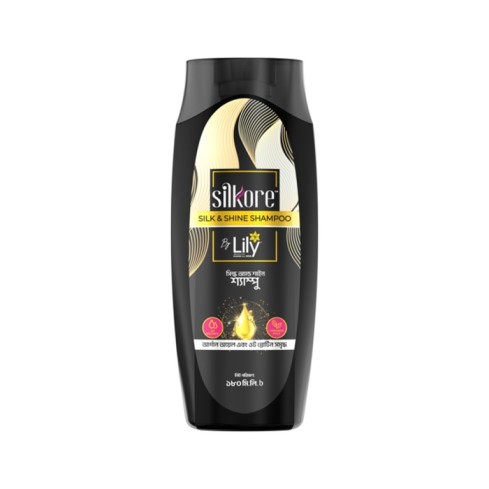
180ml shampoo from Lily's Silkore range, formulated for smoothness and shine.
Choose quantity
Hair that's lost its shine usually hasn't been damaged — it's been dulled. Heat, dust, hard water and product build up on the surface until light stops reflecting off it evenly. Lily Silkore Silk & Shine is an everyday shampoo made for exactly that: cleaning the scalp properly and leaving the hair smooth enough to catch the light again.
Lily Silkore Silk & Shine is an everyday shampoo in a 180ml bottle, formulated for smoothness and shine rather than for a specific scalp concern. It's the variant to choose when your hair is healthy but looking dull or feeling rough.
Silkore is Lily's haircare line, sold in three variants at three price points, each built around a different purpose.
Heat, dust, hard water and monsoon rain, which do more to hair here than any product does. Rinse after sweating, rinse after rain, longer final rinse if your water is hard.
Coconut oil genuinely does penetrate the hair shaft rather than just coating it, which is why it became the traditional choice. And the part people get wrong: oiled hair needs two shampoos, with the first applied before the hair is fully wet so it grips the oil. Under-washing after oiling leaves residue that flattens hair — the exact opposite of what a shine shampoo is for.
Neem, amla, henna, methi, plus onion and egg masks where I've said plainly that the enthusiasm outruns the evidence. And one line worth keeping: natural isn't a safety category, and essential oils can irritate a scalp at high concentrations.
Pick by the problem you actually have. Silk & Shine is for smoothness and finish. Hair Fall Defense is formulated around hair fall concerns. Dandoff is the anti-dandruff variant. They aren't interchangeable, and using a specialist formula when you don't need it usually means paying more for no benefit.
If your hair is in reasonable condition and you just want it to look better, Silk & Shine is the one. If you have a persistent scalp problem, the specialist variants exist for that — and anything that doesn't improve is worth raising with a doctor or dermatologist rather than treating with shampoo indefinitely.
The replacement for the harmful-ingredients list. Ingredients run by concentration, so the first five tell you most of it. Sulfates, silicones, parabens and alcohols each explained neutrally: what they do, who might avoid them, why. The silicone entry is the useful one here — buildup genuinely does cause dullness, which is directly relevant on a shine shampoo and makes the case for a clarifying wash.
Less than most people use. A coin-sized amount is enough for short to medium hair, a little more for long. Excess shampoo doesn't clean better — it just takes longer to rinse out, and shampoo left in the hair is one of the more common causes of dullness.
A 180ml bottle used this way lasts a month or more with regular washing.
Shampoo the scalp, not the lengths. The scalp is where oil and buildup are; the lengths get cleaned by the lather running through them on the way out. Work it in with your fingertips rather than your nails, and rinse for longer than feels necessary.
If your hair is very oily or you've used a lot of product, two short washes work better than one long one — the first lifts the buildup, the second actually cleans.
No — warm rather than hot. Hot water strips more oil than it needs to and leaves the hair feeling rough, which works directly against a shine-focused shampoo. A cooler rinse at the end helps the hair lie flatter, which is most of what "shine" actually is.
It depends on scalp type, activity and climate. In Dhaka's heat and humidity many people wash daily or every other day; drier hair often does better with less. There's no universal rule, and the honest answer is to wash when your scalp feels like it needs it rather than to a schedule.
Somewhere cool and out of direct sunlight, with the cap closed. A bathroom windowsill is the worst spot in this climate — heat and UV degrade the formula over time.
Keep the bottle upright once opened and use within the period stated on the packaging.