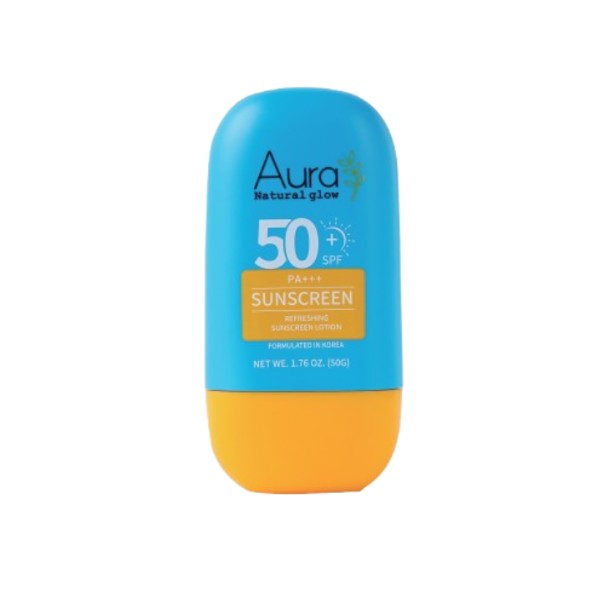
Aura Sunscreen SPF 50 PA+++ 50gm
Daily sunscreen, SPF 50 PA+++. High protection against both burning and ageing rays
Choose quantity
Similar type of products
Description :
Most people in Bangladesh get more sun in a week than they think. Not from a beach — from the walk to the gate, twenty minutes in a rickshaw, the seat by the window at work, the queue outside a shop at two in the afternoon. It adds up daily, year round, and it's the everyday exposure rather than the occasional long day outdoors that does most of the cumulative damage.
Aura Sunscreen SPF 50 PA+++ is built for that kind of use: daily, on the face and neck, before you leave the house. To get a best SPF PA 50+++ sunscreen, we need to carefully pick one from a trusted shop.
What SPF 50 actually means
SPF measures protection against UVB — the rays that cause burning.
The number is often misread as a multiplier of time, but it's better understood as a filter. SPF 30 blocks roughly 97% of UVB; SPF 50 blocks about 98%. That sounds like a marginal difference, and in laboratory terms it is.
In practice, though, SPF 50 is the sensible choice, for one reason: almost nobody applies enough. SPF is measured at a thick, even layer that most people don't come close to in daily use. Applying half the tested amount roughly halves the protection you get, so a higher starting figure gives you margin for the way sunscreen is actually used.
What PA+++ means, and why it matters here
The PA rating measures protection against UVA — a different problem from burning.
UVA penetrates deeper into the skin and is associated with photoageing and pigmentation rather than immediate redness. You don't feel it happening, which is precisely why it gets ignored.
The scale runs PA+ through PA++++, with each plus indicating a higher level of UVA protection. PA+++ is high protection.
That matters more in Bangladesh than in cooler climates, because UV levels here are substantial year-round rather than seasonal. A sunscreen that only handled UVB would leave the ageing and pigmentation side unaddressed. Sunscreen has become the essential skin care items for our country's weather.
How much to use
This is the part that decides whether a sunscreen works, and it's where most people get it wrong.
The tested amount for face and neck is roughly a quarter of a teaspoon — or, using the common shorthand, two full finger-lengths of product squeezed along the index and middle fingers.
That's considerably more than most people apply. It should feel like a lot going on, and it should be visible for a moment before it settles. A thin layer rubbed in until it disappears is not SPF 50 protection; it's something considerably lower.
If you're using less because the product feels heavy or leaves a cast, the answer is a different formula rather than less of this one. Under-applying a high SPF defeats the purpose of buying one.
When to reapply
Every two hours while you're outdoors, and immediately after sweating heavily or towelling your face.
Sunscreen applied once in the morning is not protecting you by mid-afternoon. It breaks down with UV exposure, and it comes off on hands, masks, collars and sweat — which in this climate happens faster than most people expect.
For a day spent mostly indoors, a morning application is reasonable. For a day with any real time outside, reapplication is the difference between protection and the illusion of it.
Where sunscreen goes in a routine
Lastly, After cleansing, after any treatment or serum, after moisturiser — and before makeup if you wear it.
Applying moisturiser on top disturbs the film sunscreen needs to form, so the order matters more here than elsewhere in a routine. Give it fifteen to twenty minutes to settle before going out into strong sun.
Cloudy days and windows
Two situations where people skip sunscreen, but they shouldn't do it for protecting your skin.
Cloud cover reduces UV but doesn't remove it. A significant proportion still reaches the ground on an overcast day, which is why people burn on days that didn't feel sunny.
UVA passes through window glass. UVB largely doesn't, which is why you don't burn through a window — but the ageing and pigmentation side continues indoors near a window, and in a car. If you sit by a window at work or spend time driving, sunscreen is doing something even when you're not outside.
How long a 50gm tube should last
Here's a useful test of whether you're using enough.
At the correct quantity — roughly 1 to 1.25g per application for face and neck — a 50gm tube covers about 40 applications. Used once daily, that's around six weeks.
Consequently, if a 50gm sunscreen is lasting you six months, you're applying roughly a fifth of what the SPF figure assumes. That's worth knowing before concluding a sunscreen "doesn't work" — more often the product is fine and the quantity isn't.
Storage in this climate
Keep it out of direct sunlight and away from heat, with the cap closed.
A bathroom windowsill is the worst place in Bangladesh, and a car dashboard or glovebox is worse still. Heat degrades the filters in a sunscreen over time, so a tube that's spent a hot season in a bag or a car may not deliver what the label says even before its expiry date.
If the texture has changed, if it's separated, or if it smells different from when you bought it, replace it rather than relying on it.
One thing sunscreen doesn't do
It doesn't make you immune to the sun. Shade, a hat, long sleeves and avoiding the strongest hours of the day all do more than any product, and sunscreen works best alongside them rather than instead of them.
For anything specific to your skin — a reaction, a condition, persistent pigmentation, or a mole that's changed — see a dermatologist rather than working through products.
Frequently Asked Questions
SPF measures protection against UVB, the rays that cause burning. SPF 50 filters roughly 98% of UVB against about 97% for SPF 30. The bigger practical advantage of SPF 50 is margin — most people apply less than the tested amount, so starting higher leaves more protection when you do.
UVB causes burning and works on the surface. UVA penetrates deeper and contributes to photoageing and pigmentation without any immediate sensation. You need protection from both, which is why a sunscreen carrying only an SPF figure tells you half the story.
On paper, barely — 98% against 97% of UVB filtered. In practice it's a worthwhile difference, because almost nobody applies the full tested amount and a higher starting figure absorbs that shortfall.
About a quarter of a teaspoon for face and neck, or two full finger-lengths squeezed along your index and middle fingers. It should feel like a lot and be visible for a moment before settling.
Check how long a tube lasts. A 50gm tube used correctly gives about 40 applications — roughly six weeks of daily use. If yours is lasting months, you're under-applying.
Every two hours outdoors, and immediately after sweating heavily or wiping your face. A morning application isn't protecting you by afternoon.
Generally not, if you're away from windows. Near a window, UVA still reaches you, so a morning application is worth having even on an indoor day.