
Choose quantity
Similar type of products
Description :
Switch plates are bought by the electrician in most cases, and specified by nobody. Which is fine until you're standing in a room with four separate lights and one switch that controls all of them, or four switches where two would have done.
The terminology is the obstacle, and it's simpler than it sounds.
What "4 gang 1 way" means
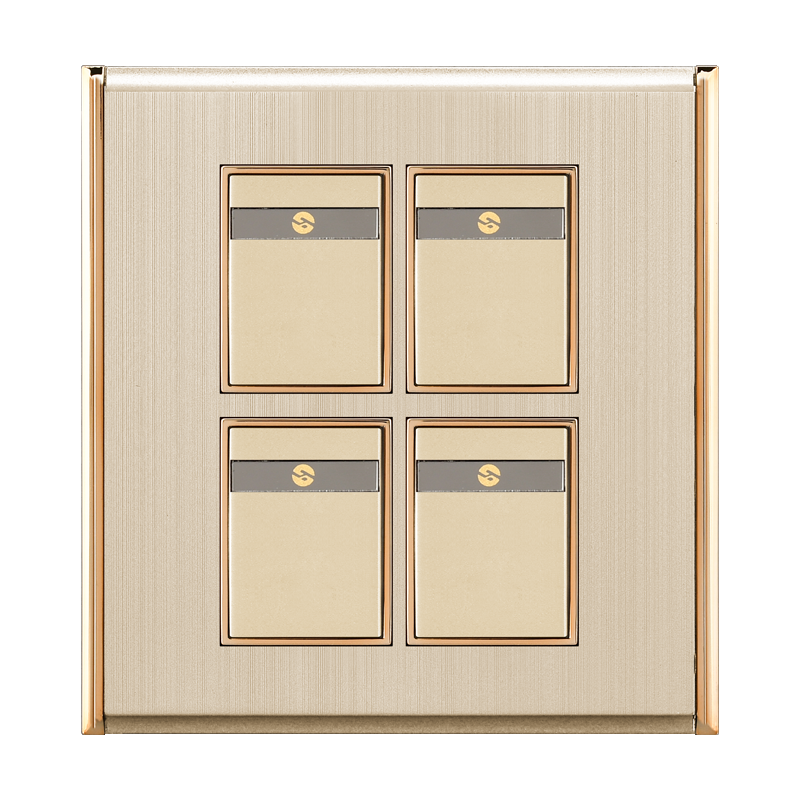
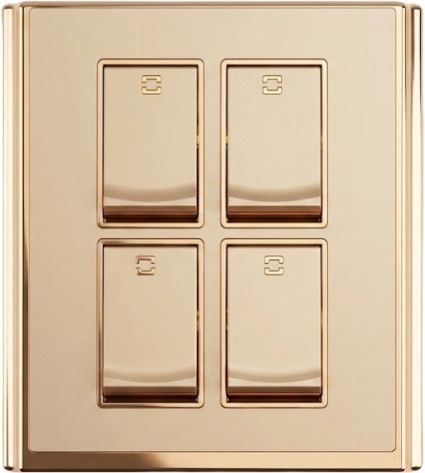
Gang is the number of switches on the plate. This one has four, side by side on a single faceplate, each operating an independent circuit.
1 way is how many places that circuit can be switched from. A 1-way switch controls its circuit from that one location only.
So a 4 gang 1 way switch gives you four separate switches, each controlling one circuit, all operated from this one point in the room.
1 way, 2 way and where each is used
This is the distinction people get wrong, and it's worth getting right before ordering.
1 way — one switch, one location. Suits the great majority of rooms: a light controlled from the doorway, a fan controlled from the wall beside it.
2 way — the same circuit controlled from two locations. This is what a staircase needs: a light you can turn on at the bottom and off at the top. Also useful in a long corridor, or a bedroom where you want the light switchable at the door and again at the bed.
A 2-way arrangement needs two 2-way switches and different wiring. You cannot do the job with 1-way switches, and you cannot convert one into the other. If a circuit needs switching from two places, that has to be decided before the wiring goes in.
For three or more switching points, an intermediate switch is used between the two 2-way switches. That's less common in homes and more so in large rooms and long hallways.
Where a 4-gang plate is used
At a room entrance controlling several fittings at once — ceiling light, wall lights, fan, and perhaps an outside light.
In a living room where lighting is split into zones, so each can be used independently.
At a landing or hallway, where several rooms' outside lights or corridor fittings converge on one point.
The way to decide the gang count is to count circuits, not fittings. Three downlights wired together are one circuit and need one switch. A light and a fan on the same wall are two circuits and need two. Getting this wrong is the usual reason a plate ends up with an unused switch — or one switch short.
Four switches on one plate against four separate plates
Functionally identical. Practically, not.
One plate needs one wall box, which means less cutting, less making good, and a tidier wall. It also keeps the controls for a room together, which is how people actually use them.
Four separate plates spread across a wall look cluttered and take four boxes.
The one drawback of a gang plate: if a single switch fails, you replace the whole plate rather than one switch. With a 50,000-operation rating that's a long way off, but it's the trade-off.
Key Specifications:
1) Maximum Operating Voltage: 250V AC
2)Maximum Operating Current: 16A AC
3)Dimension: 86 x 95.2 mm
4)ON-OFF operations exceed 50000 times
Key Features:
1) Flame Retardant, High Impact Resistance, Unbreakable Poly Carbonate (PC) Material.
2) Extensive coloring solutions & High Glossiness.
3) High Quality Metal Steel Frame.
4) High Quality silver alloy with exellent conductivity & strong elasticity.
5) Spring & Screws Salt spray tested and provide consistent contact pressure.
6) Metal parts are made of high conductive Copper alloys.
7)Used universally for all place.
8)High quality electroplating color coating
What the ratings mean
16A is the maximum current the switch is rated to carry. That's comfortably above what lighting circuits draw, and it gives headroom for fans and heavier fittings.
250V AC is the maximum operating voltage, above the mains supply — useful headroom on supplies that fluctuate.
Over 50,000 ON-OFF operations is the mechanical endurance rating. A switch used ten times a day would reach that figure in well over a decade. It's the number that separates a switch still clicking crisply after years from one that's gone soft and unreliable.
86 × 95.2 mm is the faceplate size, which matters when replacing an existing switch — it needs to match the wall box already in place.
Installation
This is work for a qualified electrician. A wall switch connects to the building's fixed wiring, and mistakes in the circuit identification, the connections or the earthing create hazards that aren't visible once the plate is screwed back on.
With a 4-gang plate there's a specific risk worth knowing about: four circuits meet at one box, and getting them crossed means switches that operate the wrong fittings. That's an irritation rather than a danger, but it means a rewire rather than a quick swap to correct.
Always isolate the circuit at the consumer unit before any work, and treat it as live until tested dead.
Choosing between the ranges
Akij Electricals makes several series — Innova, Aura, Delight and Elite — covering broadly the same functions in different finishes and specifications.
Pick one series and stay with it through a room or a property. Plates from different ranges rarely match exactly in colour, finish or profile, and a wall carrying three different styles reads as a series of repairs rather than a decision.
That matters more with switches than almost anything else, because they're at eye level and in every room.
Looking after a switch
A switch that feels soft, sticks, or no longer clicks positively is worn and should be replaced. So should any plate that's cracked, discoloured or warm in use — warmth means a poor connection and needs an electrician rather than monitoring.
Clean with a dry cloth only, and isolate the circuit if you're doing anything more than wiping the surface. Nothing wet.
Frequently Asked Questions
A 1-way switch controls its circuit from one place. A 2-way arrangement lets the same circuit be switched from two places — a staircase light operated from both the bottom and the top. Two-way needs two 2-way switches and different wiring.
No. The two aren't interchangeable and one can't be converted into the other. If a circuit needs switching from two points, it has to be wired for it.
An intermediate switch sits between two 2-way switches. More common in large rooms and long corridors than in ordinary homes — your electrician will specify it.
Count circuits, not fittings. Three downlights wired together are one circuit and need one switch; a light and a fan are two. Getting this wrong is the usual reason a plate ends up with a spare switch or one too few.
Functionally yes, practically no. One plate needs one wall box rather than four, keeps a room's controls together, and looks tidier. The trade-off is that if one switch fails you replace the whole plate.
The faceplate is 86 × 95.2 mm. If you're replacing an existing switch, that needs to match the box already in the wall — your electrician will confirm before fitting.
Finish and build specification, across broadly the same range of functions. The practical advice is to choose one series and use it consistently through a property — switches are at eye level in every room, so mismatched plates are noticeable.
It's comfortably above what lighting circuits draw, which gives headroom for fans and heavier fittings on the same plate. Whether a particular circuit suits a particular load is a question for your electrician.