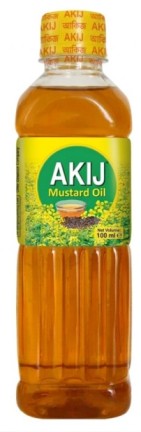
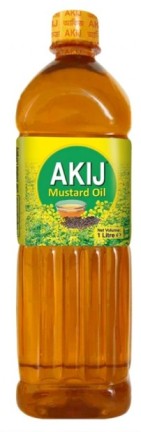
Akij Mustard Oil 500ml
Half a litre of mustard oil — pungent raw for bhorta, mellow once it's been heated.
Choose quantity
Similar type of products
Description :
Mustard oil isn't a neutral cooking oil and was never meant to be. It's pungent, golden, and sharp enough to catch the back of your throat — and in Bangladeshi cooking that sharpness is the point rather than something to be refined away.
Which makes it the one oil where how you use it matters more than which brand you buy.
What mustard oil is for
Three jobs, and they're genuinely different from each other.
Raw, drizzled over bhorta, mashed potato, dal or a plate of rice, where the pungency is the flavour.
In pickles, where it preserves as much as it seasons.
For frying, where its high smoke point suits fish and anything cooked hot.
A household that uses mustard oil for all three gets through considerably more than one that only cooks with it, which is worth thinking about before choosing a bottle size.
Raw against heated — the difference that matters
This is the thing to understand, and it explains why mustard oil tastes so different from one dish to the next.
The sharpness in mustard oil comes from compounds released when the seed is pressed. Raw, those compounds are at full strength — that nose-tingling bite is what makes bhorta taste like bhorta, and why a spoonful of raw mustard oil over hot rice is a dish in itself.
Heated, they break down. The oil mellows considerably, losing most of the pungency and leaving a rounder, nuttier flavour. That's why a curry cooked in mustard oil doesn't taste nearly as sharp as the oil does straight from the bottle.
So the same oil gives you two quite different results depending on whether it meets heat. Neither is more correct — but reaching for it expecting one and getting the other is where people go wrong.
Why it's heated to smoking first
Traditional practice is to heat mustard oil until it just begins to smoke, then take it off the heat and let it cool slightly before cooking.
It isn't superstition. Taking the oil to that point breaks down the sharpest compounds, which removes the raw bite and leaves a cleaner, rounder flavour behind. Food cooked in oil that was heated this way tastes noticeably less harsh than food started in cold mustard oil.
Two practical notes. Don't walk away — mustard oil goes from hot to smoking quickly, and burnt oil is unusable. And let it cool for a few seconds before adding anything, or the first thing in the pan scorches.
If you're using the oil raw, obviously, skip all of this.
Bhorta, and the oil that makes it
Bhorta is where mustard oil does its most recognisable work, and it's the use that justifies keeping a bottle even if you cook with something else day to day.
Whatever the base — potato, aubergine, dried fish, dal, tomato — the method is the same: mash it with raw mustard oil, finely chopped onion, green or dried chilli and salt. The oil goes in raw and generous, and it carries everything else.
Use more than feels right. Bhorta made with a cautious drizzle tastes flat. The oil isn't a dressing here; it's a main ingredient.
Mustard oil in pickles
In achar, mustard oil works as a preservative as much as a flavouring. It seals the surface, limits air contact and contributes its own sharpness to the finished pickle.
Pickles made with mustard oil keep considerably better than those made with neutral oils, which is why the tradition exists. If you're making achar at home, this is the oil to use — and use enough to cover the contents completely, since any piece sitting above the oil line is where spoilage starts.
Frying with it
Mustard oil has a high smoke point, which makes it genuinely good for frying rather than merely traditional.
It suits fish above everything — the sharpness cuts the oiliness of fried fish in a way a neutral oil doesn't, and the combination is standard across Bengali cooking for good reason. It works for vegetables, eggs and anything shallow-fried too.
What it doesn't suit is a dish where you want the oil to disappear. Mustard oil leaves its character behind, so for something delicate or neutral, a refined oil is the better choice.
How much 500ml covers
Depends entirely on whether you cook with it or only finish dishes with it.
Used raw, for bhorta and drizzling, 500ml lasts a long time — a few tablespoons at a time, several weeks or more for most households.
Used for frying, it goes much faster. A single session frying fish can take a good portion of a 500ml bottle.
The half-litre suits a household that uses mustard oil for flavour rather than as its main cooking oil. If it's what you fry in daily, the litre is the sensible size.
Storing it
Keep it cool and dark:
with the cap closed properly. Oils oxidise with exposure to light, heat and air, and mustard oil is no exception — a bottle on a sunny windowsill deteriorates far faster than one in a cupboard.
Don't store it beside the stove: wever convenient. Repeated heating and cooling accelerates the process.
The smell tells you:
Fresh mustard oil smells sharp and clean. Oil that's turned smells stale, flat or faintly of old paint — and once it does, it won't come back. That's the point to replace it rather than cook with it.
Mustard oil may thicken or cloud slightly in cold weather. That's normal and reverses at room temperature; it isn't a sign of anything wrong.
Beyond the kitchen
Worth mentioning because it's a genuine part of why households keep a bottle: mustard oil has a long traditional role here in massage and hair care, including for infants, and it's used that way across generations.
If that's your use, the same storage rules apply — cool, dark, capped — and the same smell test tells you when a bottle has gone past its best.
Frequently Asked Questions
It preserves as much as it flavours. It seals the surface, limits air contact and adds its own sharpness. Pickles made with mustard oil keep considerably better than those made with neutral oils — and the contents should be fully submerged, since anything above the oil line is where spoilage starts.
Can I use it instead of soybean or sunflower oil? For anything where you want flavour, yes. For something delicate or neutral, no — mustard oil doesn't recede into the background the way a refined oil does.
Yes — it has a high smoke point, which makes it genuinely suitable rather than merely traditional. It suits fish especially, where the sharpness cuts the oiliness. It's less suitable where you want the oil to disappear, since it leaves its character behind.
For anything where you want flavour, yes. For something delicate or neutral, no — mustard oil doesn't recede into the background the way a refined oil does.
It preserves as much as it flavours. It seals the surface, limits air contact and adds its own sharpness. Pickles made with mustard oil keep considerably better than those made with neutral oils — and the contents should be fully submerged, since anything above the oil line is where spoilage starts.
Cool, dark, with the cap closed. Light, heat and air all degrade oils, so a cupboard beats a windowsill and anywhere away from the stove beats beside it.