
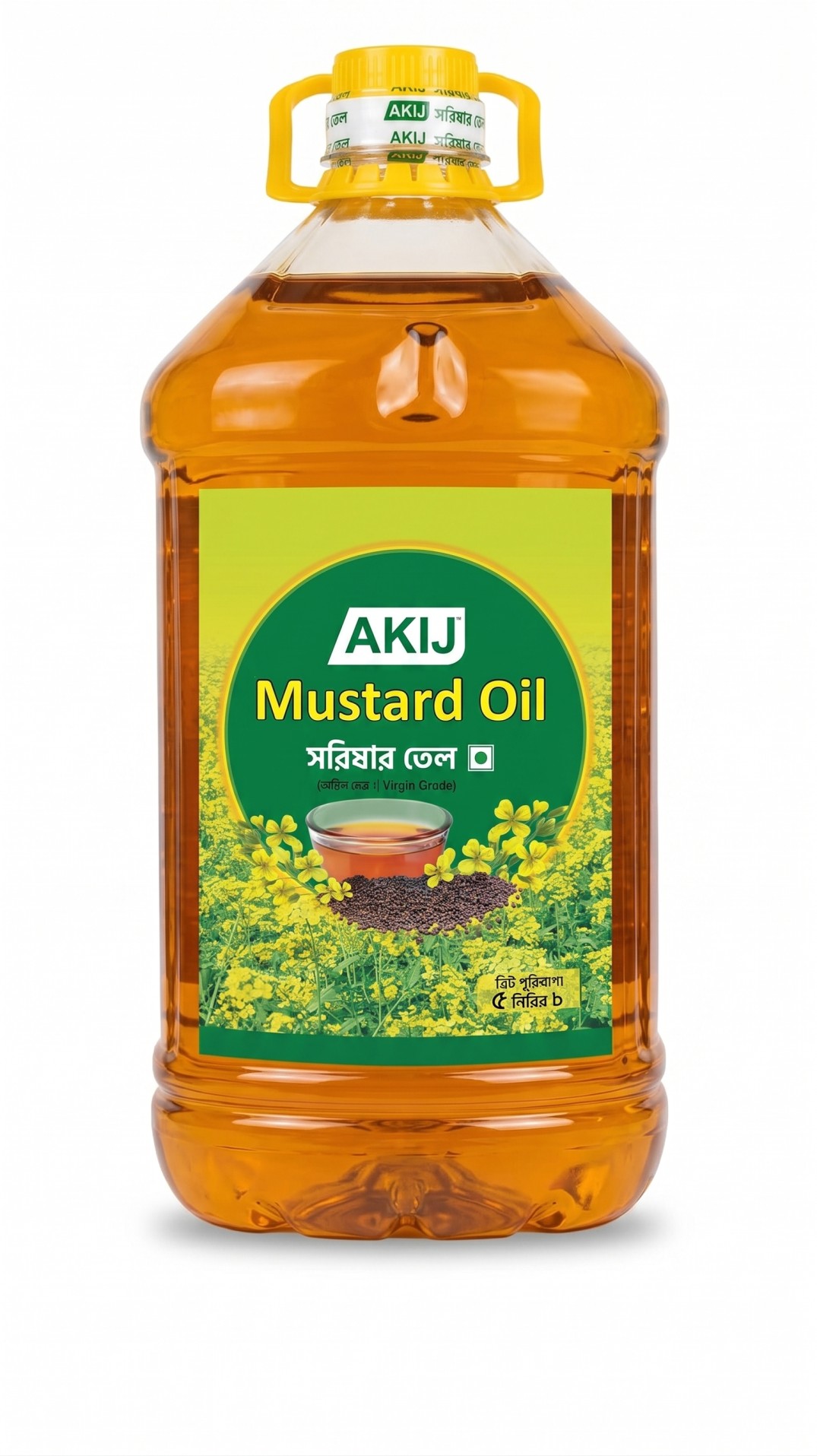
Akij Mustard Oil 5L
Five litres of mustard oil — the size you buy for pickling season or a kitchen cooking at volume.
Choose quantity
Similar type of products
Description :
Five litres of mustard oil is not a grocery purchase. It's bought for a reason — a kitchen cooking at volume, a season's worth of pickling, or a household that fries in mustard oil rather than finishing dishes with it.
And at that size, the questions change from what it tastes like to how to keep it tasting that way.
Who buys five litres:
Commercial kitchens and canteens, where mustard oil is the frying medium rather than a flavouring and a container disappears in weeks.
Caterers working a season of events, where buying once beats buying six times.
Households making achar, which is the use that most often justifies this size for a home kitchen — more on that below.
Large or extended households that fry fish regularly, where mustard oil is the default rather than an occasional choice.
What it isn't for is a household using mustard oil to finish bhorta and dress dal. At that rate five litres will last well over a year, and oil doesn't improve with keeping. The 500ml or the litre suits that pattern far better.
Mustard oil and pickling season
This is the clearest case for buying bulk, and it's seasonal.
Achar needs volume. A proper pickle is submerged in oil rather than coated with it — the oil seals the surface, limits air contact and does as much preserving as the salt does. A batch of mango or olive pickle can take a litre or more on its own.
Mustard oil is the traditional choice for good reason. Its pungency survives the long maturation a pickle goes through, and the compounds that give it that bite also contribute to keeping the jar stable.
Make sure everything stays under the oil line. Any piece sitting above it is where spoilage begins, and topping up with more oil is the fix rather than pressing the contents down.
For anyone making pickle in quantity through the season, a five-litre container is the sensible purchase and the one time a household genuinely needs it.
The headspace problem:
This is the thing that decides whether a large container was worth buying, and almost nobody thinks about it.
Oil oxidises on contact with air. In a sealed, full container there's very little air and the oil is stable. But as you use it, air replaces the oil you've poured out — so a container that's three-quarters empty holds three-quarters air.
The consequence is that the last litre deteriorates faster than the first. Oil at the bottom of a large, half-empty container has been sitting in an increasing volume of air for months, and it will taste flat and stale long before the date on the container suggests it should.
The fix is decanting, which is the next section.
Decanting for daily use:
Two reasons to decant, and the second matters more than the first.
The practical one: a five-litre container is awkward to pour from. Oil glugs, overshoots and runs down the outside, and you end up with a sticky container and an oily shelf.
The important one: decanting controls the headspace problem. Pour off a working bottle — half a litre or so — and keep the large container sealed and full-ish for as long as possible. You're opening a small bottle daily rather than exposing five litres to air every time.
As the large container empties, decant what's left into smaller bottles rather than leaving it to sit with litres of air above it. Filling two 1-litre bottles to the top is considerably better than leaving two litres in a five-litre container.
Use glass or steel for the working bottle where you can, keep it capped, and keep it away from the stove.
Frying at volume:
Mustard oil has a high smoke point, which is why it suits frying rather than merely being traditional for it.
It's the standard for fish, where the sharpness cuts through the oiliness of frying in a way a neutral oil doesn't. It handles vegetables, eggs and anything shallow-fried equally well.
Heating it to just smoking before cooking is traditional practice and it isn't superstition — taking the oil to that point breaks down the sharpest raw compounds and leaves a cleaner, rounder flavour. Let it cool for a few seconds before anything goes in, or the first item scorches.
Reusing frying oil is a judgement call. Once, strained, after light use is reasonable. Oil that's been heated repeatedly or used for fish takes on flavour and breaks down, and at volume it's worth being stricter about this than a home cook would be.
Raw against heated:
Worth restating briefly even at this size, because the difference is large.
Raw, mustard oil's pungent compounds are at full strength — that sharpness is what bhorta is built on, and what a drizzle over dal or rice is for.
Heated, those compounds break down and the oil mellows into something rounder and nuttier.
So the same container gives two quite different results depending on whether the oil meets heat.
Storing a large container:
Cool, dark, capped, and off the floor. Light and heat both accelerate oxidation, and a container stored beside a stove or in a sunlit storeroom will deteriorate noticeably faster than one in a cupboard.
Keep it sealed between decantings rather than leaving the cap loose for convenience.
The smell test is the reliable one. Fresh mustard oil smells sharp and clean. Oil that's turned smells stale, flat or faintly of old paint — and it doesn't recover.
Thickening or clouding in cold weather is normal and reverses at room temperature.
Frequently Asked Questions
Commercial kitchens, canteens, caterers, households that fry in mustard oil regularly, and anyone making pickle in quantity. If you use mustard oil mainly to finish dishes, a smaller bottle suits better.
Depends entirely on how you use it. Used for frying, weeks to months. Used raw for bhorta and dressing, well over a year — which is longer than oil keeps well once opened.
Because a pickle is submerged rather than coated. The oil seals the surface and limits air contact, doing as much preserving as the salt. A single batch can take a litre or more.
It does, and faster as the container empties. Oil oxidises on contact with air, and the space left behind as you pour fills with air — so a half-empty container holds half a container of air. The last litre deteriorates considerably faster than the first.
Decant. Pour off a working bottle of half a litre or so and keep the large container sealed. As it empties, decant the remainder into smaller bottles filled to the top rather than leaving litres of air above it.