

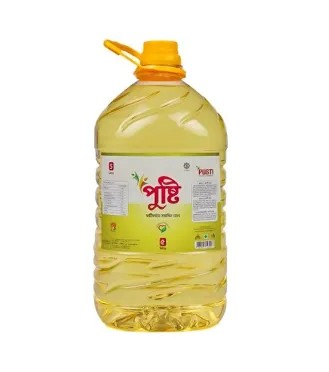
Pusti Soyabean Oil 5ltr
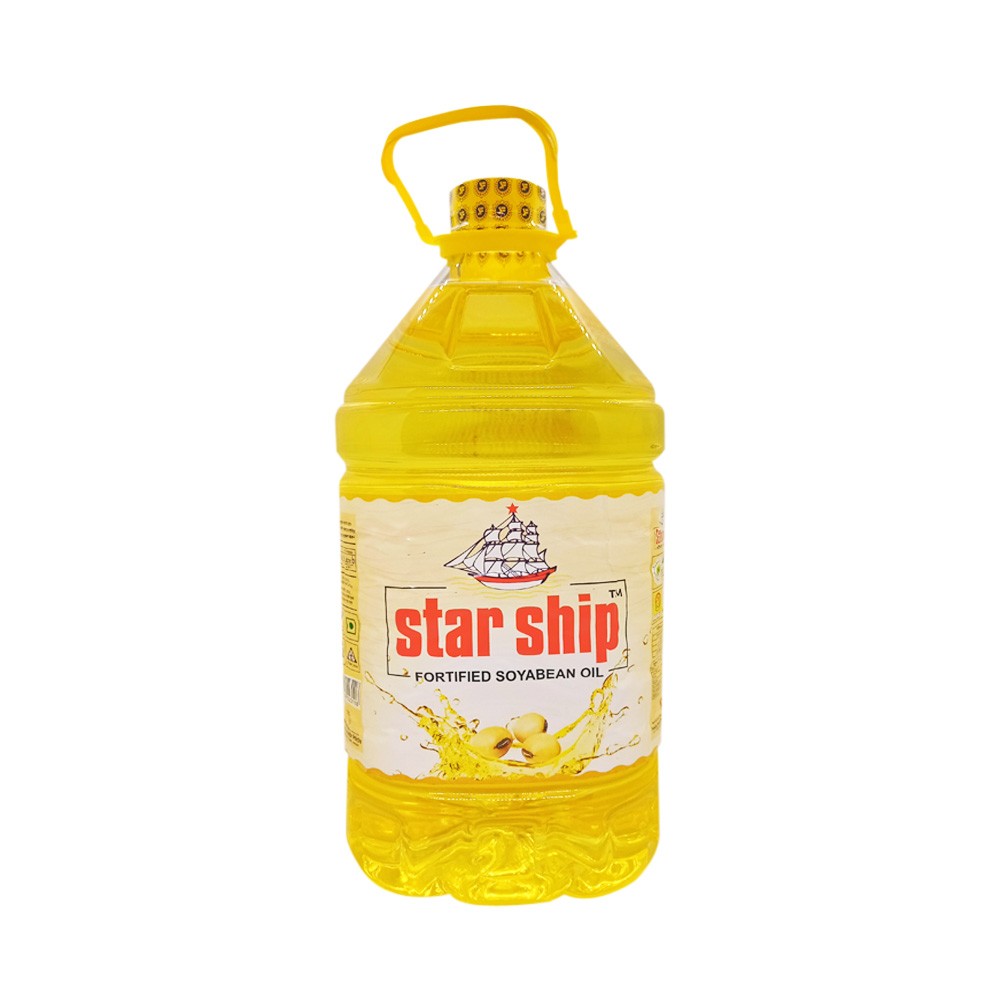
Five litres of soybean oil — the neutral everyday frying oil, in a household bulk size.
Choose quantity
Similar type of products
Description :
Soybean oil is what most kitchens here actually cook in. Not because anyone chose it over the alternatives, but because it's neutral, it handles heat, and it doesn't impose itself on the food — which is precisely what you want from the oil that does ninety percent of the work.
What soybean oil is for
Everyday cooking, and frying in particular.
It has a mild, clean flavour that recedes into whatever it's cooking rather than contributing anything of its own. That makes it the right choice for the majority of dishes — curries, vegetables, eggs, fried fish and snacks — where the spices and the main ingredient are supposed to carry the taste.
It's also the oil you want when you're frying in quantity, because a strongly flavoured oil would make every batch taste the same.
Neutral oil against flavour oil
Worth being clear about, because households here generally keep both and use them differently.
Soybean oil is a neutral oil. Its job is to transfer heat and not be noticed. You use it for the cooking itself.
Mustard oil is a flavour oil. Its pungency is the point, which is why it goes raw into bhorta and into pickles, and why a dish fried in it tastes distinctly of mustard oil.
Using the wrong one is noticeable in both directions. A bhorta made with soybean oil tastes flat and missing something. A delicate dish fried in mustard oil tastes of mustard oil rather than of itself.
Most kitchens keep a large container of neutral oil for cooking and a smaller bottle of mustard oil for flavour. That's the pattern a five-litre soybean oil fits.
Smoke point and frying:
Soybean oil has a high smoke point, which is the temperature at which an oil starts to break down and produce visible smoke.
That matters for two reasons. Practically, it means the oil can get hot enough for proper deep frying without degrading — which is what gives fried food a crisp surface rather than a greasy one. And for taste, because oil heated past its smoke point develops acrid, burnt notes that transfer to everything cooked in it.
The sign you've gone too far is visible smoke rather than shimmer. Oil that's shimmering and moving is ready; oil that's smoking steadily has gone past where you want it.
When to stop reusing frying oil
This is the section worth reading if you buy five litres at a time, because reuse is where most of that oil goes.
Reusing frying oil is normal and fine, within limits. Strain it through a fine sieve or cloth while it's still warm but not hot, store it in a sealed container away from light, and use it again.
Five signs it should be discarded:
It's gone dark. A significant darkening from the original colour means the oil has broken down.
It's thickened. Oil that pours noticeably more slowly than fresh oil has degraded.
It foams on the surface when food goes in, rather than bubbling cleanly.
It smokes at a lower temperature than it used to. The smoke point drops as oil breaks down, so oil that now smokes early is finished.
It smells off — rancid, sharp, or of whatever was last fried in it.
Two rules that matter. Don't top up old oil with fresh — the degraded oil contaminates the new and you end up throwing away both. And don't reuse oil that's been used for fish for anything else, because the flavour transfers completely.
How many times is reasonable? For most home frying, two or three uses. Less if you've fried something heavily coated or strongly flavoured.
Handling a five-litre container
Decant a working bottle: Five litres is awkward to pour from — oil glugs, overshoots and runs down the outside — so pour off half a litre or so into a smaller bottle for daily use and keep the large container sealed.
Deterioration: Oil oxidises on contact with air, and every time you open a container, air replaces what you've poured out. A five-litre container that's three-quarters empty holds three-quarters air, so the last litre ages considerably faster than the first.
As it empties, decant the remainder into smaller bottles filled to the top rather than leaving litres of air above the oil.
Storing it
Cool, dark, capped, and away from the stove. Light and heat both accelerate oxidation, and a container stored beside a cooker or in a sunlit storeroom deteriorates noticeably faster than one in a cupboard.
Keep the cap properly sealed between uses rather than leaving it loose for convenience.
Off the floor in a storeroom, both for cleanliness and because floors are cooler and damper than shelves.
How to tell when oil has gone off
Smell is the reliable test. Fresh soybean oil smells faintly of very little — that neutrality is the point. Oil that has gone rancid smells stale, sharp, or faintly like old paint or crayons.
It doesn't recover, and cooking won't mask it. Once the smell has turned, the oil should go.
Cloudiness in cold weather is normal and reverses at room temperature. It isn't a sign of anything wrong.
Frequently Asked Questions
Everyday cooking and frying, where you want the oil to transfer heat without contributing flavour. It's the neutral oil most kitchens here use for the bulk of their cooking.
Soybean oil is neutral and recedes into the food; mustard oil is pungent and makes itself known. Most households keep soybean oil for cooking and a smaller bottle of mustard oil for bhorta, pickles and dishes where that sharpness is wanted.
Yes — it has a high smoke point, so it can reach proper frying temperature without breaking down. That's what gives fried food a crisp surface rather than a greasy one.
The temperature at which an oil starts to break down and produce visible smoke. Past that point it develops acrid, burnt notes that transfer to the food. Shimmering oil is ready; steadily smoking oil has gone too far.
Five signs: it's gone noticeably dark, it's thickened and pours slowly, it foams when food goes in, it smokes at a lower temperature than it used to, or it smells rancid. Any one of those means discard it.
No. The degraded oil contaminates the fresh and you end up discarding both. Use the old oil up or throw it away, then start clean.
Decant a working bottle of half a litre or so for daily use and keep the large container sealed. It's easier to pour from and it limits how often the bulk oil is exposed to air.
_(1)_(1)_(1).jpg)

.jpg)
.jpg)
.jpg)