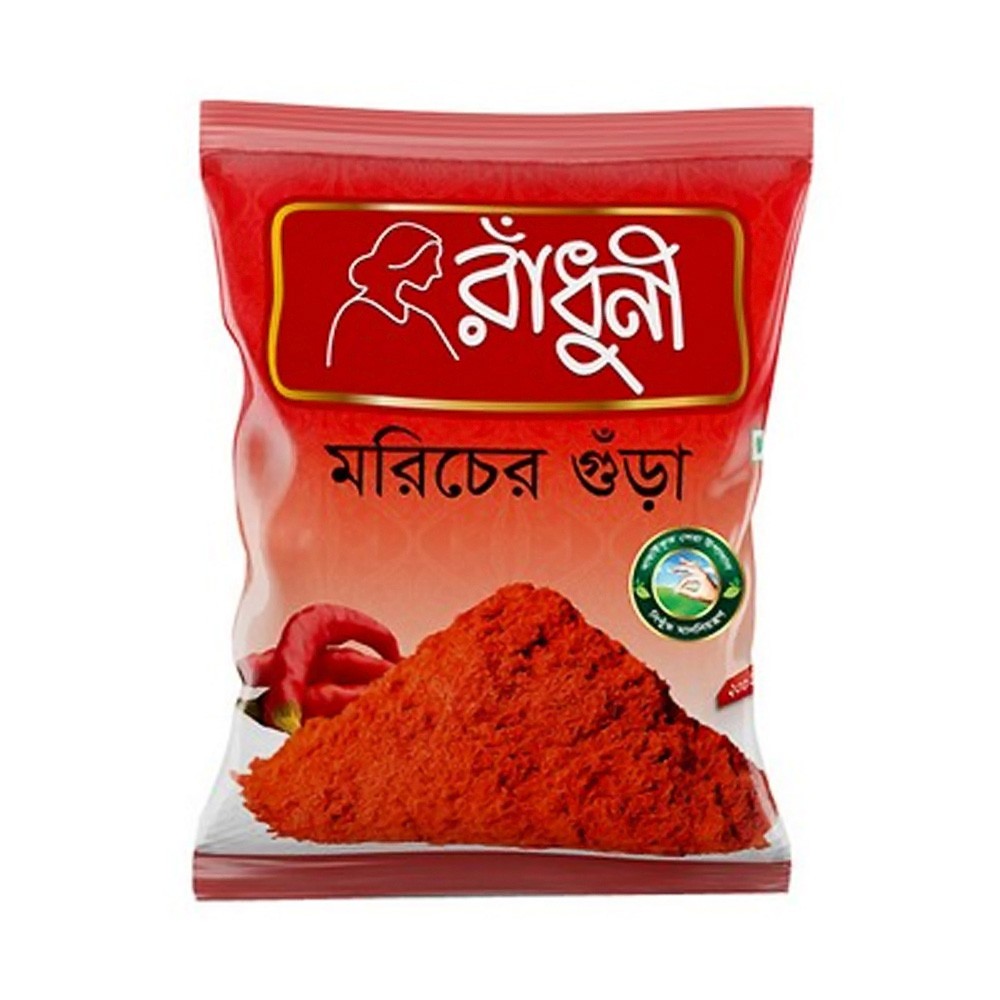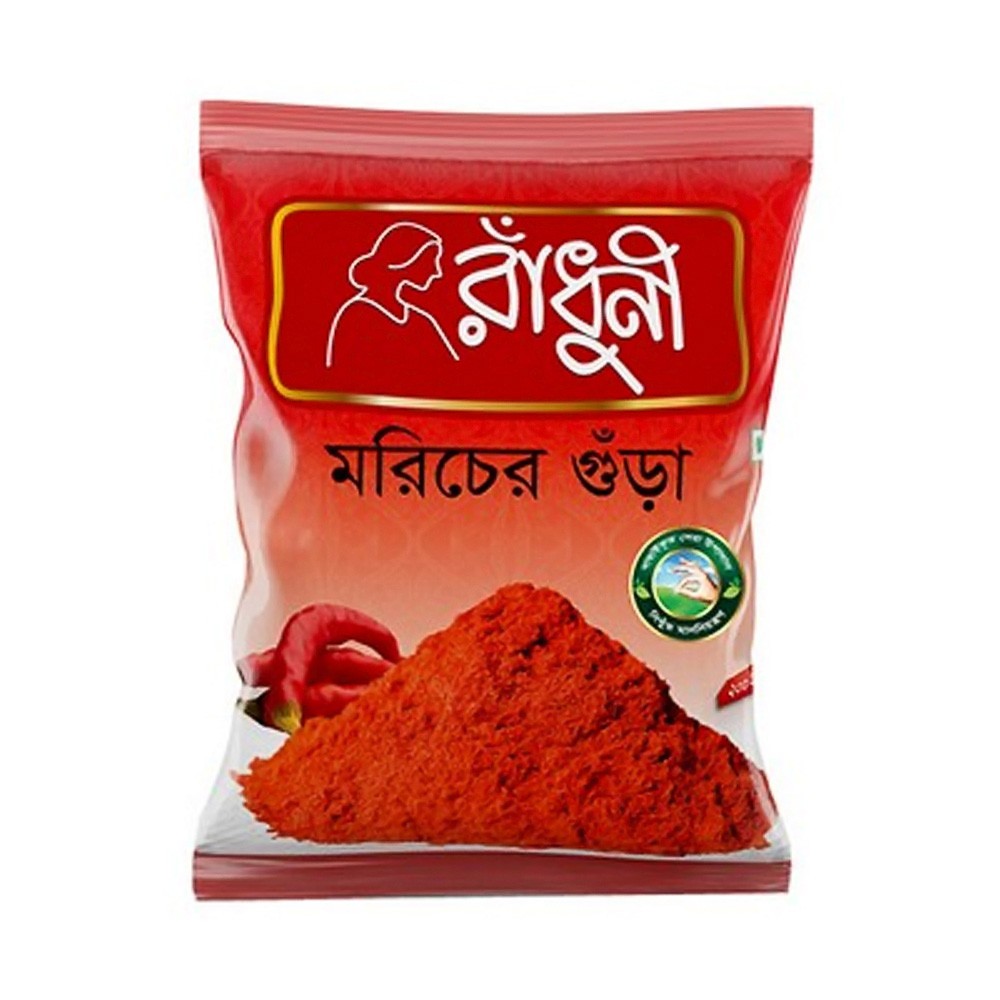

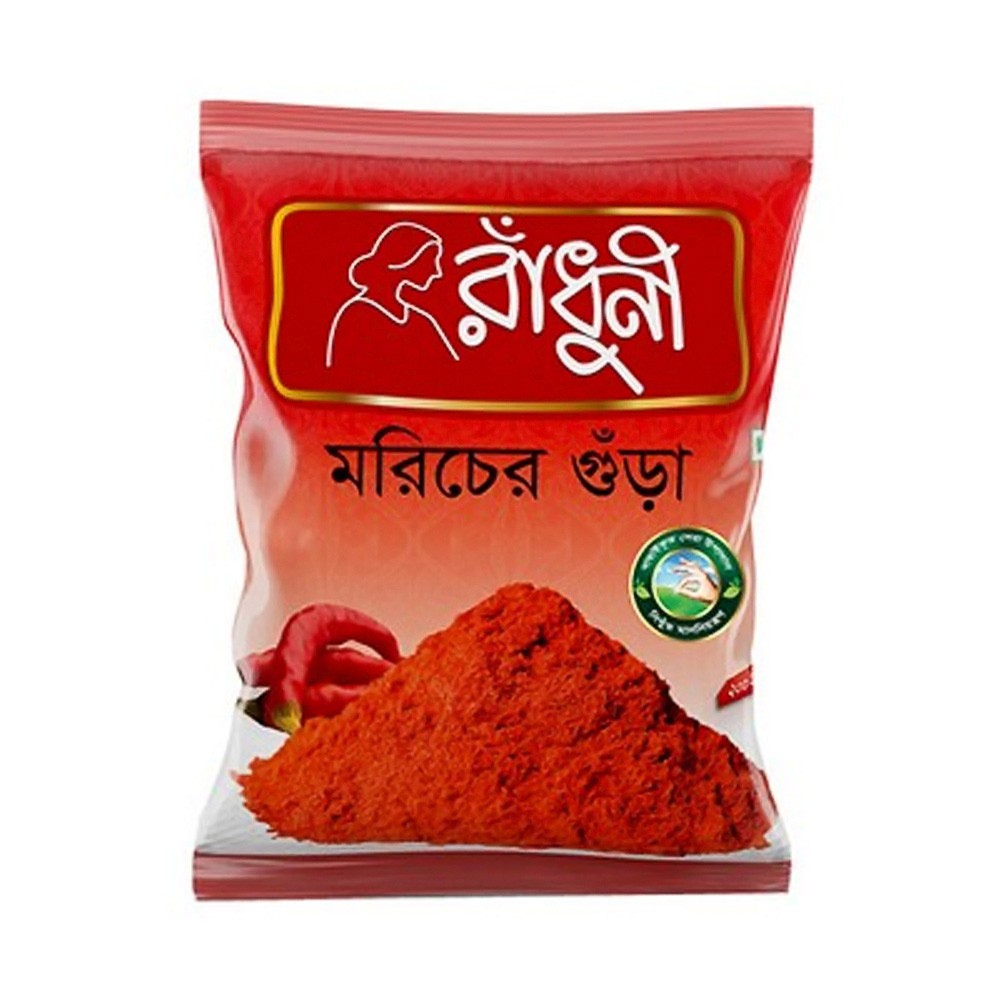
Radhuni Chilli Powder 1kg
A kilo of Radhuni chilli powder — the household name, at the market rate.
Choose quantity
Similar type of products
Description :
Radhuni is the brand most Bangladeshi kitchens recognise before they read the label — one of the few spice names that's become shorthand for the category itself. A kilo of it is a different kind of purchase from a jar.
What Radhuni is
Radhuni is among the best-established packaged spice brands in Bangladesh, with a range running well beyond single spices into curry masalas, fish and meat masalas and BBQ blends.
That matters for a reason beyond familiarity. A brand selling a broad, consistent range has to keep its single spices consistent too, because they're the base its blends are built on. For something bought repeatedly, batch-to-batch consistency is worth more than a few taka either way.
What a kilo costs per dish
A level teaspoon of chilli powder weighs roughly 2.5 grams, so a kilo is around four hundred teaspoons.
At two teaspoons for a curry serving four, that's two hundred dishes, or eight hundred portions — which works out at a little over 0.8 taka of chilli powder per portion.
For anyone costing a menu, that's effectively a rounding error. The practical consequence is that buying the recognised brand rather than the cheapest available costs almost nothing per plate, which is worth knowing if consistency matters to you.
Whether a kilo is right for you
Be honest about the maths before buying this size.
A kilo suits commercial kitchens, caterers, hostel and canteen kitchens, large households cooking two full meals a day, and anyone who portions and stores spice properly.
It doesn't suit a household cooking with chilli a few times a week. Ground chilli is at its best for roughly six months after opening and noticeably flatter after a year — so a kilo that takes eighteen months to finish will spend most of its life underperforming, and you'll compensate by using more.
The 100gm and 200gm Radhuni packs exist for that, and the per-kilo difference between them and this is smaller than the cost of spice that goes dull.
Storing a kilo properly
This decides whether the purchase was worth it.
Portion it on day one:
Split the kilo into four or five smaller airtight containers rather than leaving it in one. Open one at a time and keep the rest sealed — the container in use gets exposed to air daily, but only ever holds a few weeks' worth.
Glass or steel, not plastic:
Plastic absorbs oils and odours over time, and large plastic containers are worst because of the surface area.
Cool, dark, away from the stove:
Air, light, heat and moisture are the four things that degrade ground spice, and a shelf above the cooker supplies three of them.
Never dip a wet spoon in:
Moisture causes clumping and eventually mould — and in a large container it spoils far more than it would in a jar.
Freezing ground spice
Worth doing at this size, and almost nobody does.
Ground spices can be frozen, and it slows the loss of the volatile oils that carry aroma and flavour considerably. Portion into small airtight containers, freeze what you won't use within a couple of months, and keep one portion at room temperature for daily use.
One rule matters. Let a frozen container come fully back to room temperature before opening it. Opening a cold container in a warm kitchen condenses moisture straight onto the spice, which is exactly what you were trying to prevent.
Done properly, a kilo portioned and frozen on day one is still sharp a year later. Left in its original packet on a shelf, it won't be.
How much to use:
For a curry serving four: one to two teaspoons for a mild dish, two to three for a properly spiced one. Bangladeshi cooking generally sits at the higher end.
For volume cooking, work from weight rather than spoons — roughly 5 to 7 grams per four portions gives a consistent result across batches in a way teaspoons don't.
Add it gradually, and taste after it's cooked rather than before. Raw chilli powder is harsh and dusty and changes considerably once it's been through oil and heat.
When to add chilli in cooking:
Early, in the oil with the onions and other spices, the powder releases its colour and its deeper, rounder heat into the base. This is what gives a gravy its colour.
Late, near the end, it stays sharper and sits on top of the dish rather than blending in — useful for adjusting a batch without rebuilding it.
Never on a dry, very hot pan alone. Chilli powder scorches within seconds and burnt chilli turns acrid in a way that can't be corrected. In a kitchen cooking at volume, that's a wasted batch rather than a wasted pan.
Why blooming spices in oil matters:
Many of the flavour and colour compounds in ground spices are fat-soluble rather than water-soluble. Heating them briefly in oil releases those compounds into the fat, which then carries them through the whole dish.
Stirring the same quantity into a watery gravy extracts considerably less — which at volume means using more spice for the same result, and that does show up in costs.
How long it keeps:
Roughly six months from opening at room temperature, considerably longer frozen. Unopened and stored cool, go by the printed date.
The test is smell. Fresh chilli powder smells sharp and distinctly of chilli when the container opens. If it smells of very little, it's done its work.
Frequently Asked Questions
Radhuni sits a little above the cheapest options and well below the most expensive. At comparable sizes, ACI Pure and Akij come to roughly BDT 650 to 665 a kilo, Radhuni around BDT 665 to 750 depending on pack size, and Chefs Choice around BDT 820 to 900.
Only if you cook with chilli most days or can store it properly. Ground chilli fades within about six months of opening, so a kilo that takes eighteen months to finish spends most of its life underperforming. The 100gm and 200gm packs exist for lighter use.
A level teaspoon weighs about 2.5 grams, so a kilo is roughly four hundred teaspoons — two hundred curries or eight hundred portions at two teaspoons per dish.
A little over 0.8 taka per portion at this price, which for a kitchen costing a menu is effectively a rounding error.
Early in the oil for deeper colour and rounder heat that blends into the base; late for sharper heat that sits on top. Late addition is useful for adjusting a batch without rebuilding it.
Many flavour and colour compounds in ground spices are fat-soluble, so brief heating in oil releases them into the fat, which carries them through the dish. Stirring into a watery gravy extracts far less — which at volume means using more spice for the same result.