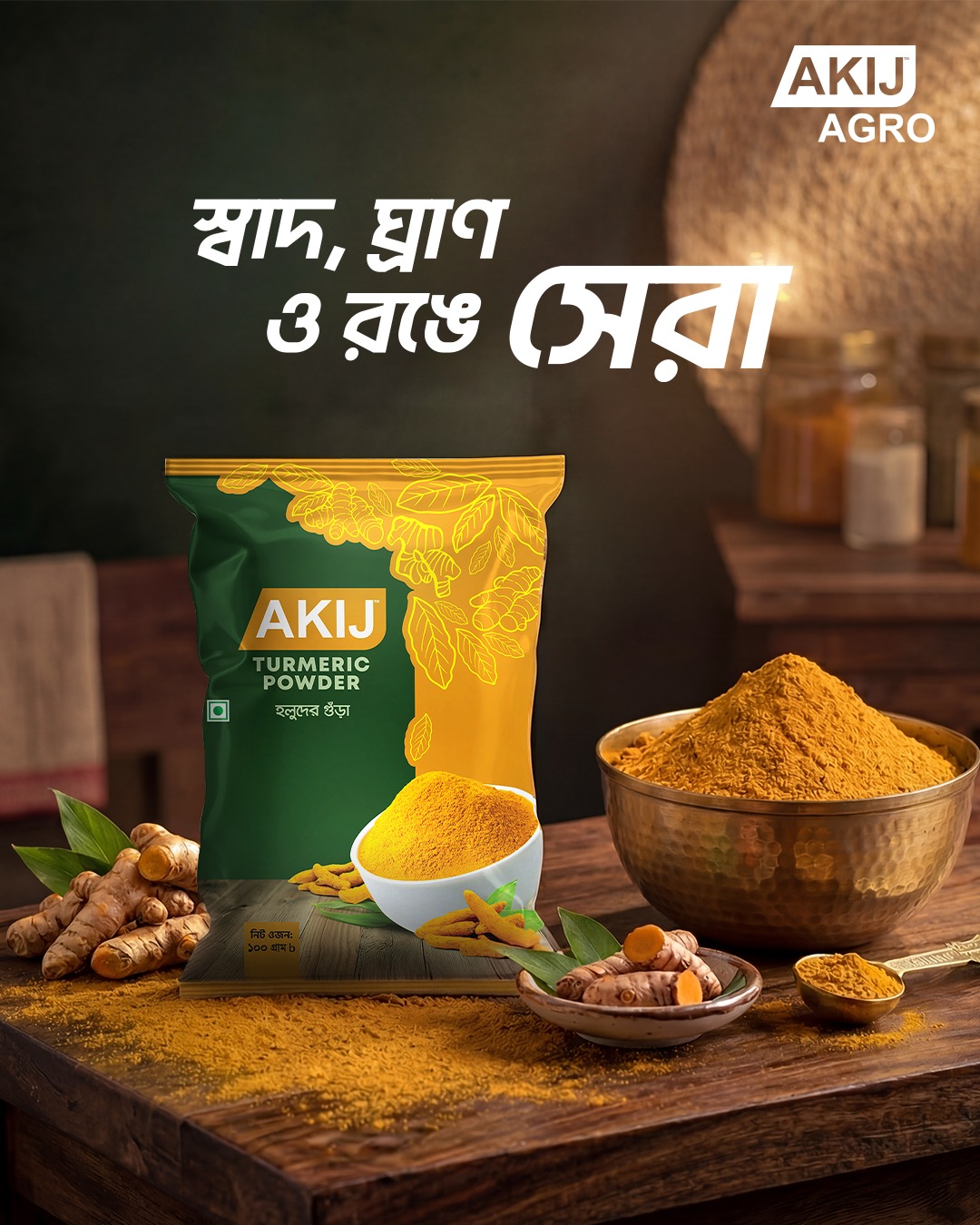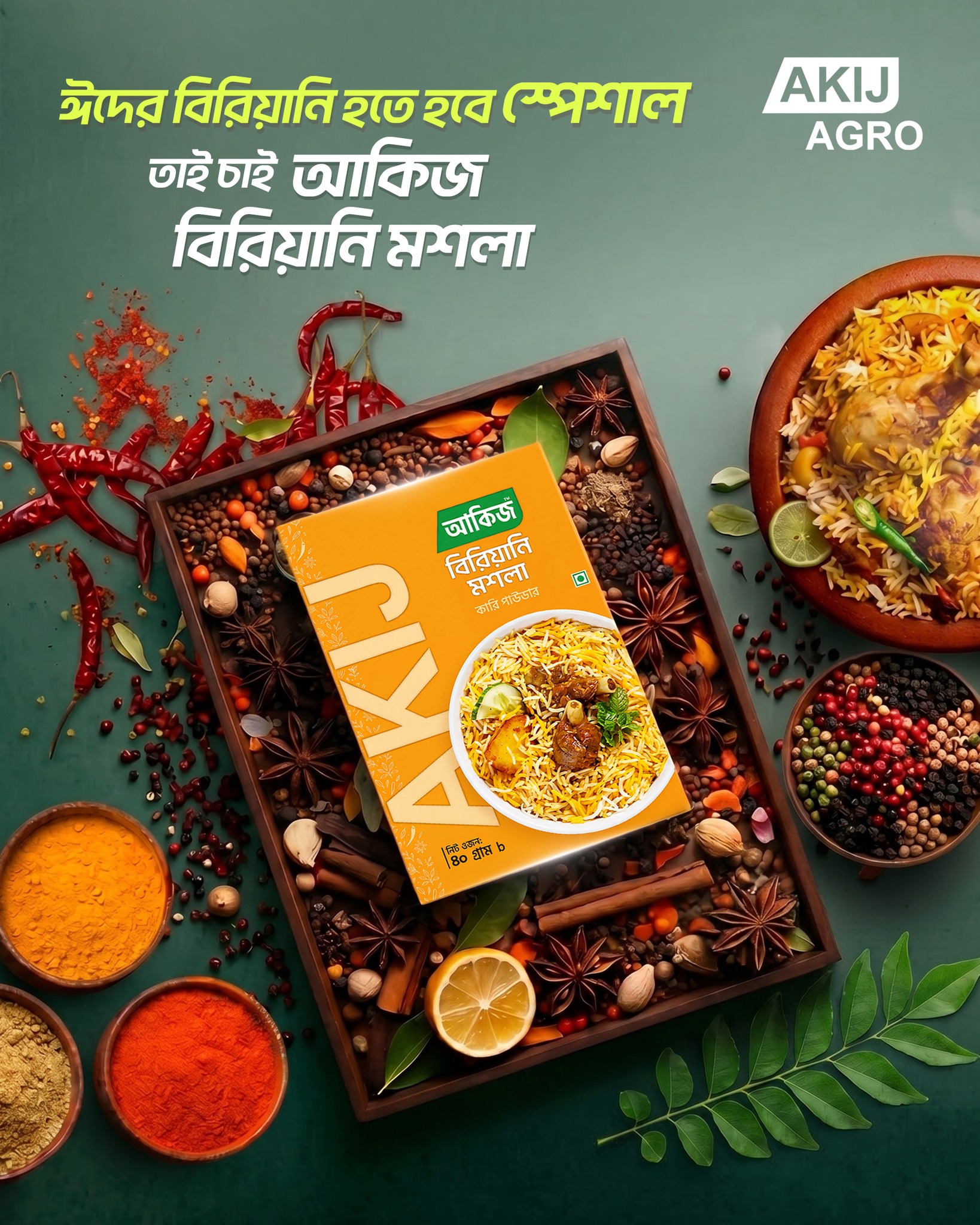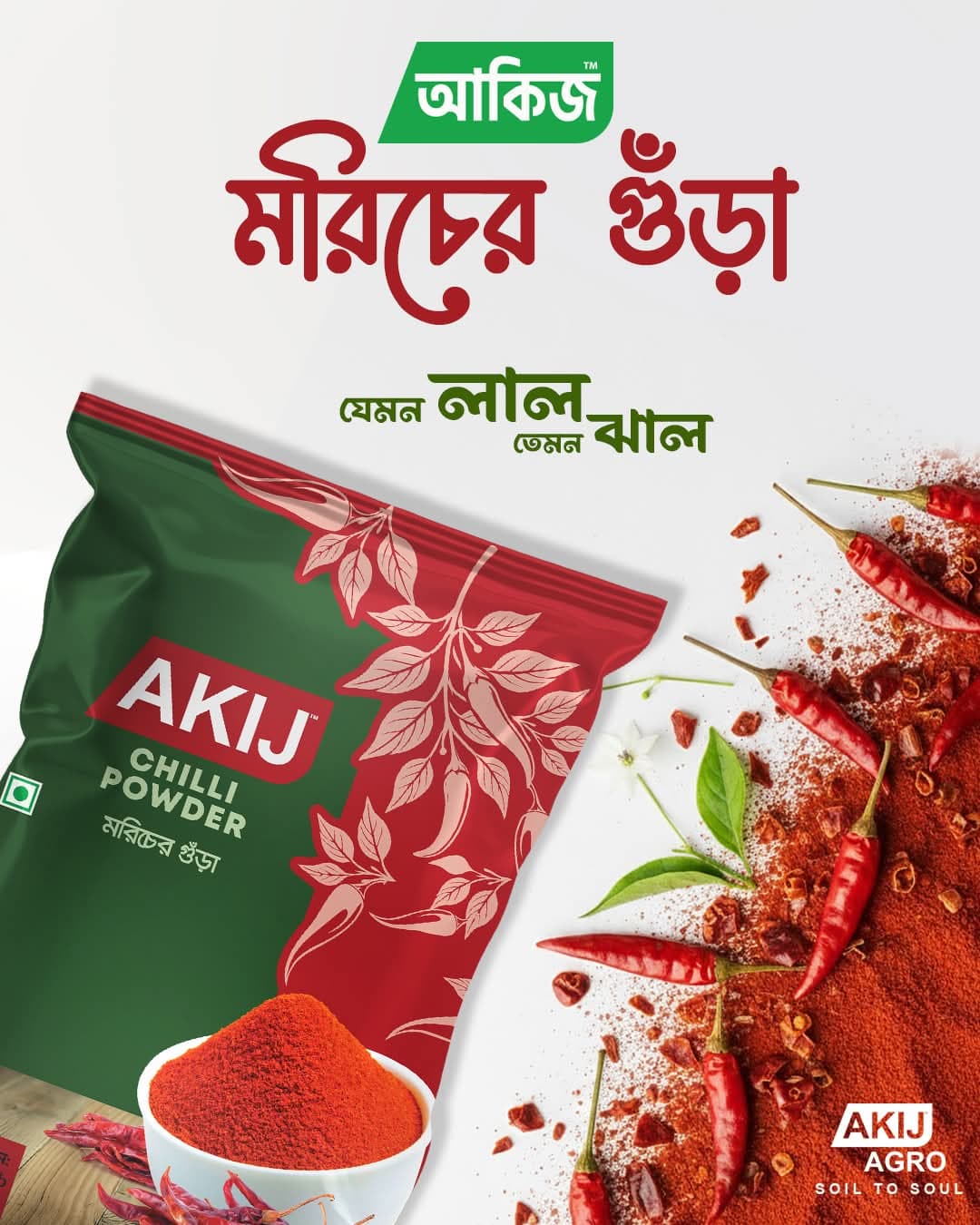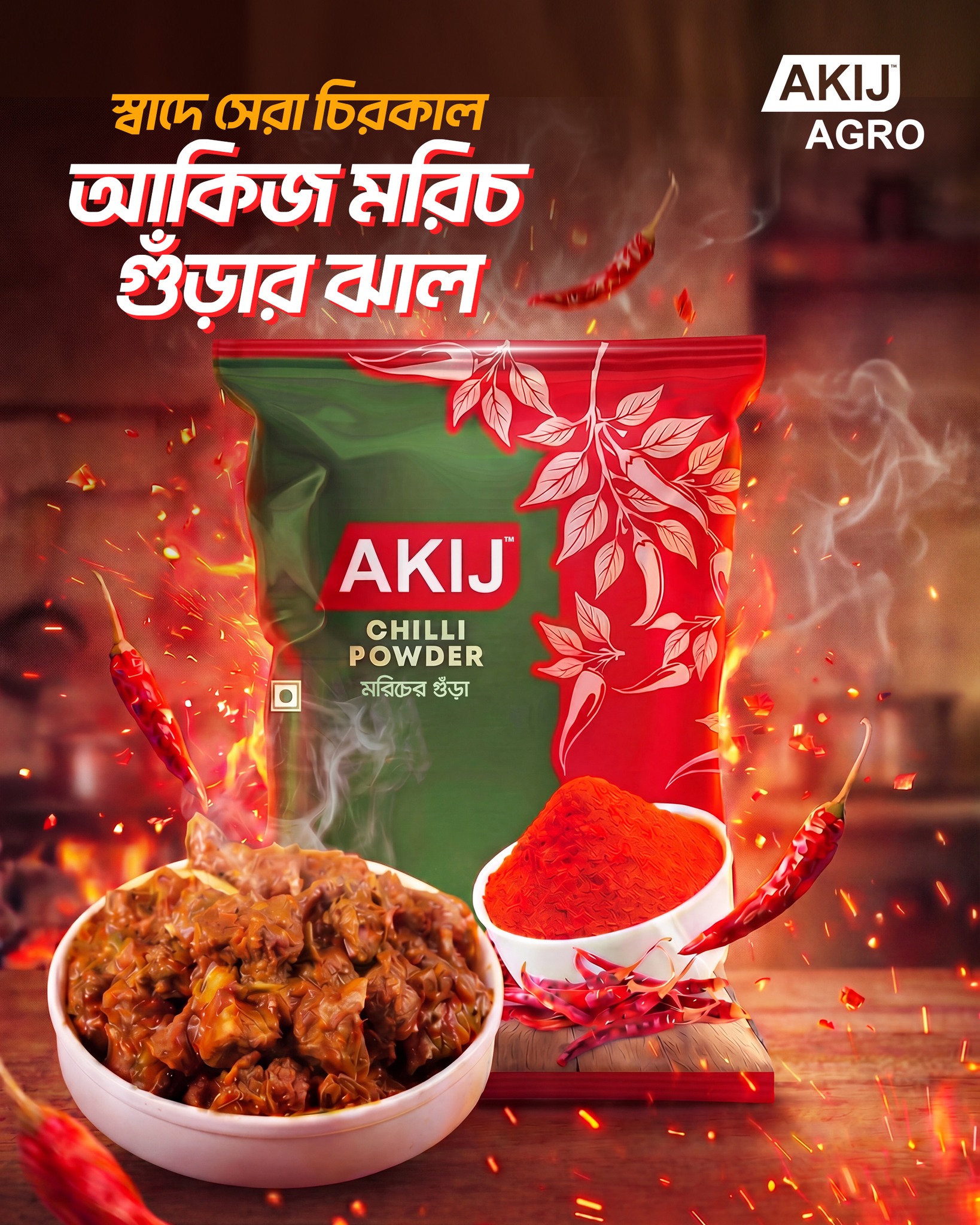

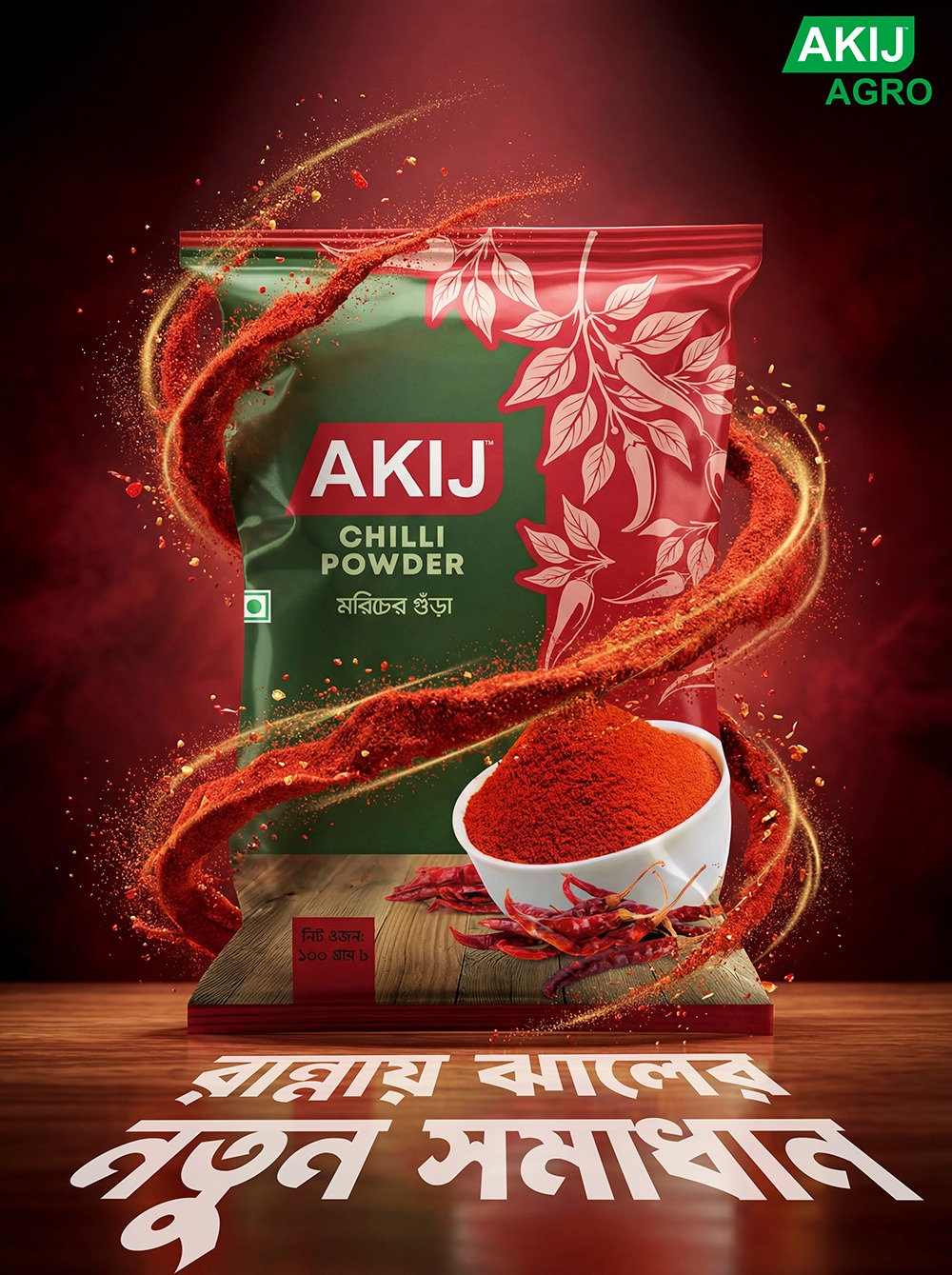
Akij Chilli Powder — 100gm
100gm of pure chilli powder — the jar size, and enough to fill a masala box compartment.
Choose quantity
Similar type of products
Description :
A hundred grams is the size most Bangladeshi kitchens actually keep. Not because of the price — the saving over the 50gm is small — but because it's the amount that fits where spices live, and the amount a household gets through while it's still sharp.
The jar size:
Most kitchens here store daily spices in a masala dani — the round steel box with compartments — or in a set of small jars beside the stove. A 100gm pack fills one compartment or one jar with nothing left over to find a home for.
That sounds trivial and isn't. The most common reason a spice goes stale is that it lives in a half-open packet at the back of a shelf because there was nowhere obvious to put it. A size that fits the container you already use gets decanted, sealed and used.
In practical terms, 100gm is roughly forty level teaspoons — a chilli powder teaspoon weighs about 2.5 grams. At one to two teaspoons for a curry serving four, that's twenty to forty dishes, or somewhere around two to three months of ordinary household cooking.
That lands comfortably inside the window where ground spice is at its best, which is roughly six months from opening.
Colour and heat are not the same thing:
This is worth understanding, because it explains why two chilli powders that look identical can behave completely differently in a pan.
Chilli varieties differ in what they're grown for. Some produce deep red colour with relatively mild heat — Kashmiri chilli is the best-known example. Others deliver serious heat with much less colour. A few do both moderately.
So when a recipe wants a rich red gravy without setting anyone's mouth alight, the answer isn't less chilli powder — it's a powder bred for colour. And when a dish needs heat without turning everything crimson, the reverse applies.
Most commercial chilli powders here are blends, balanced to give both colour and heat, because that's what everyday Bangladeshi cooking wants from a single jar. This one is described as delivering vibrant natural colour along with real heat, which is the blend most kitchens need.
Practical consequence: if your curry has plenty of heat but looks pale, adding more chilli powder will make it inedible before it fixes the colour. Tomato, paprika or a colour-focused chilli are the tools for that.
What sun-drying does:
Akij describe these chillies as sun-dried, which is the traditional method rather than the fastest one.
Sun-drying takes days rather than hours, and it's done at low temperatures. Mechanical drying is quicker and more controllable, but high heat can dull the red pigments that give chilli powder its colour.
It's also the method most Bangladeshi chilli has always been processed by, which is part of why locally dried chilli has the deep red character people here expect.
Worth reading the pack for the full declaration, as always.
So this size isn't chosen for price. It's chosen because it fits — one jar, one compartment, two to three months of cooking, finished while it's fresh. For most households that's the right trade, and the few taka per kilo either way is not what decides it.
If you cook with chilli daily and can store it properly, the 200gm and above are better value. If you cook occasionally, the 50gm is less to waste.
How much to use:
For a curry serving four: one to two teaspoons for a mild dish, two to three for a properly spiced one. Bangladeshi cooking generally sits at the higher end.
Add it gradually — you can always add more, and there's no taking it out. And taste after it's cooked rather than before, since raw chilli powder is harsh and dusty and changes considerably once it's been through oil and heat.
When to add chilli in cooking:
Timing changes the result more than quantity does.
Early, in the oil with the onions and other spices, the powder releases its colour and its deeper, rounder heat into the base. This is what gives a gravy its colour.
Late, near the end, it stays sharper and sits on top of the dish rather than blending in — useful for adjusting heat without rebuilding the base.
Never on a dry, very hot pan alone. Chilli powder scorches within seconds, and burnt chilli turns acrid in a way that cannot be corrected. If the oil is smoking, take the pan off the heat before the powder goes in.
Why blooming spices in oil matters:
Many of the flavour and colour compounds in ground spices are fat-soluble rather than water-soluble. Heating them briefly in oil — the tadka step — releases those compounds into the fat, which then carries them through the whole dish.
Stirring the same quantity straight into a watery gravy extracts considerably less. That's why a curry with the spices bloomed at the start tastes deeper than one where they went in later, with identical amounts of everything.
Twenty to thirty seconds in warm oil is enough.
Storing ground spice:
Four things degrade it: air, light, heat and moisture.
Decant into an airtight jar — glass or steel rather than the pack, which lets air in every time it's opened. Keep it dark, since light breaks down the pigments that give chilli powder its red. Keep it away from the stove, which is where most people store spices and the worst place for them. And never dip a wet spoon in, since moisture causes clumping and eventually mould.
A 100gm pack decants neatly into a standard spice jar with nothing left over, which is most of the argument for this size.
How long it stays good:
Roughly six months from opening for flavour, though it stays safe well beyond that. Ground spice fades rather than spoiling — and you compensate by using more, which is the hidden cost of an old jar.
The test is smell. Fresh chilli powder smells sharp and distinctly of chilli when the jar opens. If it smells of very little, it's done its work whatever the printed date says.
Frequently Asked Questions
The 100gm is the size most households settle on — it fills a standard spice jar or masala box compartment, and it's two to three months of ordinary cooking. Price isn't really the reason to choose it.
Only slightly — a few percent per kilo. The big saving in this range is the step from the 15gm sachet to the 50gm. The next meaningful one is at 200gm.
If you cook with chilli daily and can store it in an airtight container away from light and heat. Ground spice fades within about six months of opening, so a large pack only saves money on the portion you use while it's still good.
A level teaspoon weighs about 2.5 grams, so 100gm is roughly forty teaspoons — around twenty to forty curries depending on how heavily you spice.
Because colour and heat come from different chilli varieties. Some chillies are grown for deep red pigment with mild heat; others for heat with little colour. Adding more of a hot powder will make the dish inedible before it fixes the colour — tomato or a colour-focused chilli is the tool for that.
Sun-drying is the traditional method — days at low temperature rather than hours at high heat. High-temperature drying is faster but can dull the red pigments. Akij describe these chillies as sun-dried.
A sealed pack from a named manufacturer carries a batch code, a date and a company answerable for the contents. Ground spices are difficult to assess by eye, and loose spice by weight offers no traceability.
One to two teaspoons for a mild curry serving four, two to three for a properly spiced one. Add gradually and taste after it's cooked, not before.