

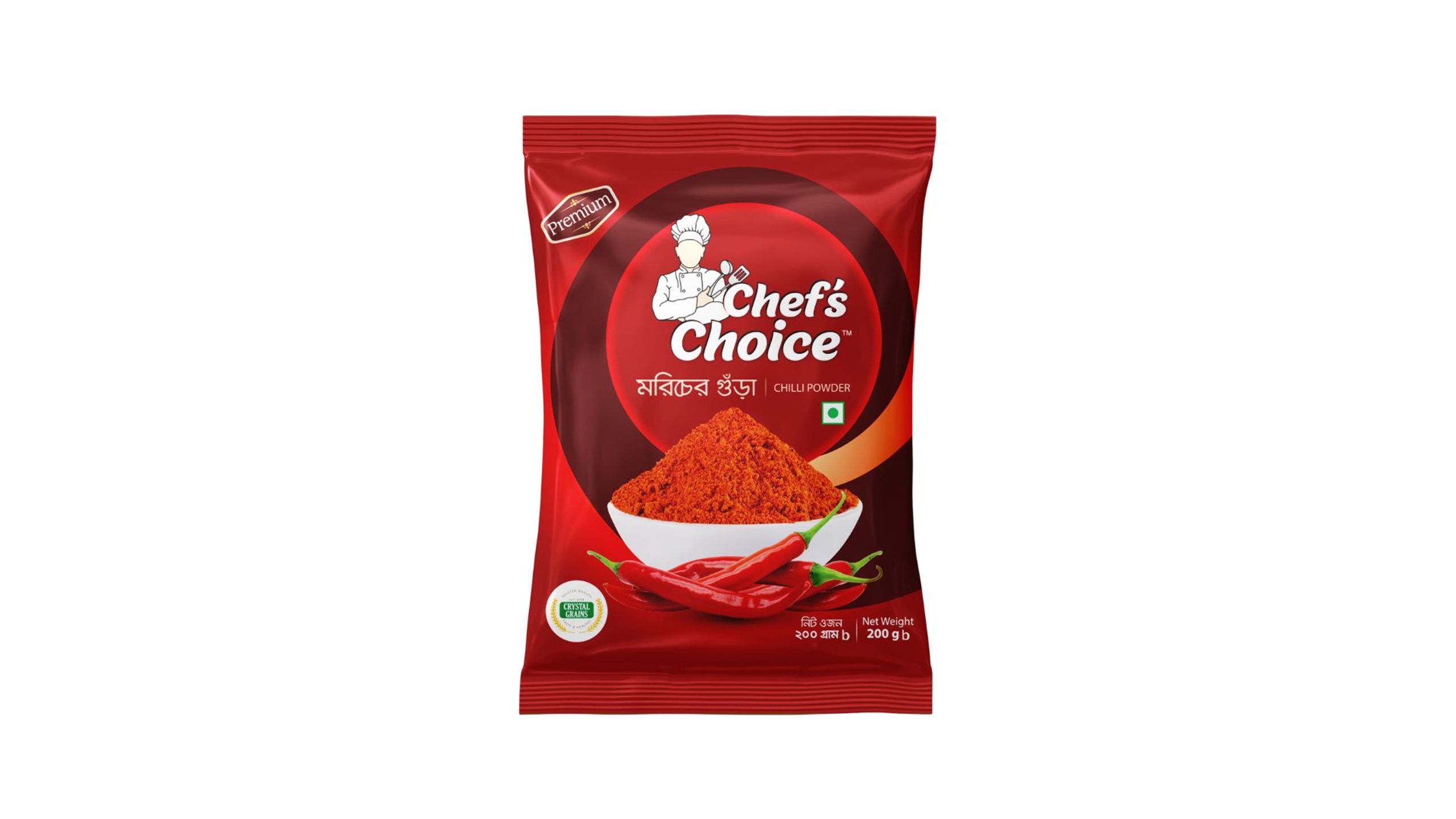
Chefs Choice Chilli powder 200gm
Chefs Choice chilli powder, 200gm — the size to buy in this range.
Choose quantity
Similar type of products
Description :
Chilli powder comes in two sizes under this label, and the choice between them is simpler than it looks — though not in the direction most people assume.
Which size to buy in this range
The 200gm, for almost everyone:
The 500gm works out at around BDT 820 a kilo against about BDT 850 here — a saving of roughly 3.5%, or fifteen taka if you compare like for like. That's a smaller gap than most spice ranges offer between their sizes.
And it has to be set against how ground spice behaves. Chilli powder is at its best for roughly six months after opening and noticeably flatter after a year. A 500gm pack is four to eight months of ordinary household cooking, so a good share of it will be past its best by the time you reach it.
Fifteen taka doesn't cover that. Unless you're cooking in volume — a restaurant kitchen, a caterer, a large household — the 200gm is the one to buy, and you'll get better-tasting food out of it.
How much eighty teaspoons covers:
A level teaspoon of chilli powder weighs roughly 2.5 grams, so 200gm is around eighty teaspoons.
At one to two teaspoons for a curry serving four, that's forty to eighty dishes — two to four months for most households, which sits comfortably inside the window where ground spice stays sharp.
How chilli powders differ:
Four things vary between one red powder and another, and none is visible through the packaging.
Heat:
Chilli varieties differ enormously in capsaicin content, so two powders can be a long way apart on the plate.
Colour:
Some chillies are grown for deep red pigment with mild heat, others for heat with little colour. A powder that gives a rich red gravy isn't necessarily a hot one.
Blend:
Most commercial chilli powders combine varieties, balanced so a single jar delivers both colour and heat.
Grind:
A finer grind releases colour and heat faster and blends smoothly into a gravy, but scorches faster too. A coarser grind releases slowly and leaves visible flecks, which suits dry preparations and rubs.
When you switch brands, taste rather than measuring out the same spoonfuls from habit. The amount that was right for one powder may not be right for another, and that's the most common reason a familiar dish suddenly tastes wrong.
How much to use:
For a curry serving four: one to two teaspoons for a mild dish, two to three for a properly spiced one. Bangladeshi cooking generally sits at the higher end.
Add it gradually, and taste after it has cooked rather than before. Raw chilli powder is harsh and dusty, and changes considerably once it's been through oil and heat.
When to add chilli in cooking:
Early, in the oil with the onions and other spices, the powder releases its colour and its deeper, rounder heat into the base. This is what gives a gravy its colour.
Late, near the end, it stays sharper and sits on top rather than blending in — useful for adjusting heat without rebuilding the base.
Never on a dry, very hot pan alone. Chilli powder scorches within seconds, and burnt chilli turns acrid in a way that cannot be corrected. If the oil is smoking, take the pan off the heat before the powder goes in.
Why blooming spices in oil matters:
Many of the flavour and colour compounds in ground spices are fat-soluble rather than water-soluble. Heating them briefly in oil — the tadka step — releases those compounds into the fat, which then carries them through the whole dish.
Stirring the same quantity straight into a watery gravy extracts considerably less. That's why a curry with the spices bloomed at the start tastes deeper than one where they went in later, with identical amounts of everything.
Twenty to thirty seconds in warm oil is enough.
Storing it:
Four things degrade ground spice: air, light, heat and moisture.
Decant into an airtight jar, glass or steel rather than the pack it came in. Keep it dark, since light breaks down the pigments that give chilli powder its red. Keep it away from the stove, which is where most people store spices and the worst place for them. And never dip a wet spoon in, since moisture causes clumping and eventually mould.
At 200gm you can keep it in one jar without decanting into multiple containers, which is one fewer thing to manage than a larger pack.
How long it keeps:
Roughly six months from opening for flavour, though it stays safe well beyond that. Ground spice fades rather than spoiling — and you compensate by using more, which is the hidden cost of an old jar.
The test is smell. Fresh chilli powder smells sharp and distinctly of chilli when the jar opens. If it smells of very little, it's done.
Frequently Asked Questions
The 200gm, for most households. The 500gm saves only about 3.5% per kilo — fifteen taka comparing like for like — and ground chilli fades within roughly six months of opening. Unless you cook in volume, the smaller pack gives you better-tasting food for almost the same mone
Many flavour and colour compounds in ground spices are fat-soluble, so brief heating in oil releases them into the fat, which carries them through the dish. Stirring into a watery gravy extracts far less.
Higher. At the same 200gm size, ACI Pure works out around BDT 650 a kilo and Akij around BDT 665, against about BDT 850 here. Whether that reflects a different product — origin, grind, grade or blend — isn't stated on the listing. Ask Metromart support on WhatsApp (01805552413) before ordering if it matters to you.
Roughly eighty teaspoons, so forty to eighty curries depending on how heavily you spice — two to four months for most households.
One to two teaspoons for a mild curry serving four, two to three for a properly spiced one. Add gradually and taste after it's cooked.
Yes, for the first few dishes. Two powders at similar prices can be a long way apart on heat, and that's the usual reason a familiar dish suddenly tastes wrong.
No. Colour and heat come from different chilli varieties. Some are grown for deep pigment with mild heat, others for heat with little colour.
It's been burnt. Chilli scorches within seconds in hot oil and turns acrid in a way that can't be corrected. Take the pan off the heat before adding it if the oil is smoking.
_90gm.webp)
_98gm.webp)
.jpg)