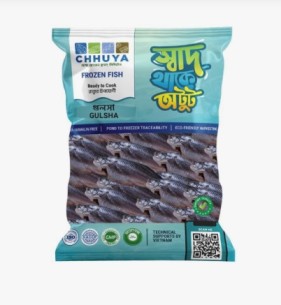
Chhuya Premium Gulsha 450gm
Chhuya Premium Gulsha 450gm (Processed fish for easy cooking)
Choose quantity
Similar type of products
Description :
Frequently Asked Questions
They're close relatives and often confused, which is understandable — both are small, scaleless freshwater catfish that turn up in similar dishes. The difference is in the eating. Gulsha has a softer, sweeter flesh and a more delicate flavour, which is why it's generally regarded as the finer of the two and priced accordingly. Tengra is a little firmer and more robust. If you've cooked tengra and enjoyed it, gulsha is the step up rather than a different experience entirely.
Supply and reputation together. Gulsha is harder to produce at the volumes that keep prices down — unlike koi, which farms fast and at scale and sits near BDT 500 per kilo here. Gulsha works out to roughly BDT 1,078 per kilo in this pack, ahead of tengra at about BDT 1,000, shing at BDT 886 and pabda at BDT 728. Add to that its standing as a delicacy in Bengali cooking, and demand holds firm even at the top of the range. The price reflects scarcity and status, not a difference in freshness.
The product page doesn't state it — a gap that runs across the whole Chhuya range. Gulsha is scaleless, so descaling was never part of the job, but whether the fish arrives gutted isn't specified. Message Metromart Online support on WhatsApp (01805552413) or Messenger to confirm before ordering.
Not stated, and it depends on the grade. Gulsha is a small fish, so a 450g pack holds a fair number of them. By weight it serves two to three people as the fish course alongside rice and dal. Because gulsha is usually cooked as something of an occasion rather than an everyday dish, most households order it for a specific meal rather than for stock.
It has a central bone and a manageable structure, but it's a small fish, so eating it involves more care than a larger, simpler one like pabda. For adults it's no trouble. For young children, either debone the pieces first or choose pabda or a fillet instead — pabda in particular gives you a similar softness with noticeably less work.
Wild gulsha is scarcer and more strongly flavoured, and commands a higher price than farmed. The page doesn't specify which this is. Given the price point sits at the top of the range, it's worth asking support directly if the distinction matters for what you're cooking.
Freezing shortly after harvest holds flavour and nutrition well. The consideration with a delicate fish like gulsha is texture — it shows thaw damage sooner than a firm fish would, which is why refrigerator thawing rather than the cold-water shortcut is the better choice when you can plan for it. Against bazaar gulsha bought late in the day, frozen is the more reliable option, and gulsha isn't a fish you'll find at every stall in any case.
Overnight in the refrigerator. If you can't plan that far ahead, submerge the sealed pack in cold water and change the water every 20–30 minutes. Avoid warm water and never thaw on the counter — both warm the outside into bacteria-friendly temperatures while the centre stays frozen, and with soft-fleshed fish they cost you texture as well.
No. Refreezing costs texture and safety margin in any fish, and delicate ones suffer most. Thaw only what you plan to cook. If you've thawed more than you need, cook all of it and refrigerate the cooked portion for the next day.