Metromart Online light logo
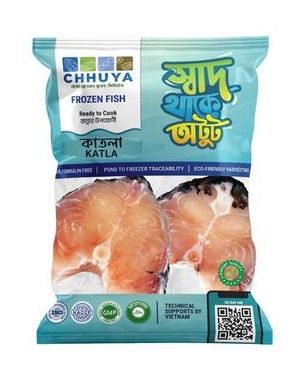
Chhuya Premium Katla Slice 500 gm
Chhuya

Chhuya Premium Katla Slice 500gm

Chhuya Premium Katla Slice 500 gm (Processed fish for easy cooking)

SKU: 7373Weight: 0.5 kg
Price:BDT 385
Status: In Stock !!

Choose quantity

1
Total priceBDT 385

Similar type of products

Description :

Katla is the fish that shows up when something is being marked. A wedding lunch, a jamai adbo, the meal cooked because a relative has come a long way — katla kalia in a thick, dark gravy is what that occasion tastes like in a Bengali household. It's a broad, heavy-bodied carp, and it has always carried a slightly grander reputation than the fish people cook on a weekday. Chhuya Premium Katla Slice puts it within reach without the production. Half a kilo of cross-cut slices, frozen, no whole fish to choose and carry home. Katla or rui — the difference that actually matters These two carps get used interchangeably, and plenty of households buy whichever the market has. But they don't cook the same way. Katla is the fatter fish. Its flesh is softer, richer and carries more natural oil, which is why it takes so well to heavy gravies — the fat and the spice meet each other properly. Rui is firmer and leaner, which makes it more forgiving in a long simmer and better suited to a plain jhol. The practical upshot: if you're making kalia, doi katla or anything rich and slow, katla rewards you. If you want fish fried plainly or dropped into a thin everyday curry, rui is the more sensible buy — and cheaper, at roughly BDT 640 per kilo against BDT 770 here. Katla's slices are also wider, because the fish is deeper through the body. A slice looks more substantial on the plate for the same weight. What the extra fat does in the pan? Richness is katla's whole appeal, and it changes how you cook. The fat keeps the flesh moist through slow cooking, so katla holds up in a gravy that would leave a leaner fish dry. It also means you need less oil than instinct suggests — the fish contributes its own. And it stands up to garam masala, ghee and browned onion without being flattened by them, which is precisely what kalia asks for. The trade-off is that soft flesh breaks more readily than firm. Fry the slices briefly before they go into gravy, and turn them as little as you can manage. What to cook? Katla kalia — the definitive dish. Browned onion, ginger, garam masala, a thick gravy, ghee to finish. Doi katla — yoghurt-based, gently tangy, and a natural fit for a fattier fish. Katla peti fry — belly slices, turmeric and salt, shallow-fried. The fat crisps at the edges. Shorshe katla — mustard paste, direct and sharp against the richness. Katla macher jhol — the lighter everyday version, if that's what the evening calls for. If you came looking for the head Katla's head is the celebrated part of the fish — muri ghonto is built around it, and a katla head is bigger and fattier than a rui's. A product sold as "slice" would not normally include it, and this listing doesn't say either way. If the head is what you're after, check with Metromart Online support before ordering rather than hoping it turns up in the pack. Keeping it and thawing it: Store at -18°C until the day you cook. Shift the pack to the refrigerator the evening before and let it soften slowly — with a soft-fleshed fish this matters more than it does with rui, because rushed thawing costs texture you can't get back. Where there isn't time, stand the sealed pack in cold water and refresh the water every twenty to thirty minutes; half a kilo comes round quickly. Warm water is worth avoiding on principle: it leaves the outer flesh sitting at unsafe temperatures long before the middle has given. Blot the slices dry before frying. Cook them within a day of thawing, and don't return thawed fish to the freezer. Buying it: Set the quantity, choose where it should go, and pay through any secure method at checkout. Straight into the freezer when it arrives.

Frequently Asked Questions

Yes, particularly in a rich preparation. Katla is softer and carries more fat, so in a kalia or a doi-based gravy it tastes fuller and less lean than rui does. In a plain thin jhol the gap narrows and rui arguably does the better job, because it holds its shape more confidently. Cooks who use both tend to keep rui as the default and buy katla when the dish is meant to be a bit of an event.

It's the more sought-after of the two carps, largely because of the fat content and its association with occasion cooking, and it doesn't come to market in quite the same volume. In this range that puts it at roughly BDT 770 per kilo against about BDT 640 for rui slices. Whether it's worth the difference depends entirely on what you're cooking — for a plain curry, probably not.

Not really, but it changes your method. Use less oil in the pan than you would for a leaner fish, since katla releases its own. For a genuinely light meal, a thin jhol with potato and green chilli works fine — you just won't get the lean, clean quality that rui gives you. If light is the priority most evenings, rui or a tilapia fillet is the better default.

The listing doesn't specify, which matters more with katla than with most fish. The belly — peti — is where the fat concentrates, and katla peti is genuinely prized; the back, gada, is leaner with a bigger central bone. In a 500g pack of two or three slices, the mix could easily fall entirely one way. Ask Metromart Online support on WhatsApp (01805552413) or Messenger if you have a preference.

No count is published, and it depends on cutting thickness. Because katla is a deep-bodied fish, its slices tend to be wider than rui's at the same weight, so expect roughly two to three. As the fish course with rice and dal, 500g serves two to three people.

For two or three people, yes. For a table of five or six with katla as the centrepiece, order two packs or move up to the 1kg version — kalia is a dish people come back to for a second piece, and running short of it is worse than having some left.

Manageable. Like rui, katla slices have one substantial central bone and a few visible side bones that lift out rather than needing to be picked through. The softer flesh actually makes separating them easier. Check a young child's portion first, but this is a world away from eating a small whole fish like tengra.

Overnight in the refrigerator, and more so than with a firm fish — katla's softness shows the damage from a rushed thaw. If you must speed it up, keep the pack sealed and sit it in cold water, changing the water every twenty to thirty minutes. Never warm water, and never the kitchen counter.

Check it while the rider is still there and make sure it's frozen right through. If it's soft, split or leaking, message Metromart Online support on WhatsApp (01805552413) or Messenger straight away with a photo. Note that the published Returns & Refunds policy deals with admin-cancelled orders rather than the condition of goods on arrival, so support is the route to a resolution.