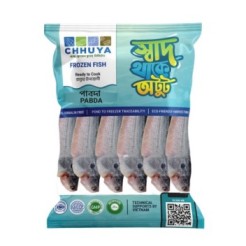
Chhuya Premium Pabda 460gm
Premium Pabda 460 gm Chhuya - (Processed fish for easy cooking)
Choose quantity
Similar type of products
Description :
Frequently Asked Questions
Yes — this is pabda's main claim, and it holds up. It has a straightforward central bone and very few of the fine, scattered bones that make fish like mola or small tengra difficult for children. That's why pabda, along with fish like koral, tends to be the one Bengali households introduce children to first. It still isn't boneless, so check the pieces before serving to a young child, but the work involved is a fraction of what most local fish demand.
Because it's soft-fleshed, and most cooks treat it like a firmer fish. Three things fix it. Pat the fish completely dry and give it a light fry before adding it to any gravy, which firms the outside. Keep the heat moderate rather than high. And turn it once — every extra turn with a spatula is another chance for it to split. When you add it to a gravy, add it late and let it finish there rather than simmering it from the start.
Pabda is scaleless, so the descaling problem doesn't arise at all — that's one job removed regardless. Whether the fish comes gutted is not stated on the product page. Frozen fish from a packer of this type is usually supplied cleaned, but it's worth a quick message to Metromart Online support on WhatsApp or Messenger to confirm before you order.
The page doesn't give a count, and it depends on the size the fish were graded at. By weight, 460g serves three people comfortably as the fish course with rice and dal, or two if pabda is the main event. For guests, order two packs.
The gap reflects how each fish is produced. Koi is farmed at high volume and grows quickly, which is why it sits around BDT 500 per kilo here. Pabda is harder to farm at scale and carries more of a delicacy reputation, putting it near BDT 728 per kilo in the same range. Neither price says anything about freshness — it's supply and status, not quality.
Wild pabda is scarcer, more strongly flavoured and considerably more expensive than farmed. The page doesn't specify which this is, and at this price point farmed is the more likely answer. If the distinction matters for what you're cooking, ask support before you order.
Freezing soon after harvest preserves flavour and nutrition well. With pabda, the one thing to watch is texture, since delicate fish show freezer damage sooner than firm ones — which makes slow refrigerator thawing more important here than it would be for koi. Set against a bazaar purchase made late in the day from an unknown seller, frozen is the more predictable choice.
Overnight in the refrigerator, without exception if you can plan for it. The cold-water method works when you can't, provided the pack stays sealed and you change the water every 20–30 minutes. Avoid warm water and avoid the kitchen counter — both thaw the outside into bacteria-friendly temperatures while the middle is still solid, and with a soft fish they also wreck the texture.