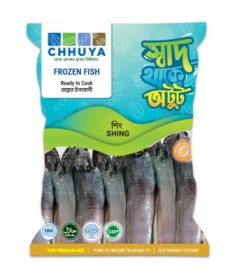
Chhuya Premium Shing 440 gm
Chhuya Premium Shing 440 gm (Processed fish for easy cooking)
Choose quantity
Similar type of products
Description :
Frequently Asked Questions
The concern is real but it applies to live fish, not to what arrives in your kitchen. Shing has sharp pectoral and dorsal spines that can deliver a painful sting, which is why handling them at the bazaar takes practice. Once the fish is processed and frozen, the hazard of a live, thrashing fish is gone. Still handle the raw fish with normal kitchen sense — the spines themselves remain firm — and there's no risk at all once it's cooked.
The product page doesn't say, which is a gap worth closing before you order. Shing is scaleless, so descaling was never part of the job, but whether the fish comes gutted and trimmed isn't stated. A quick message to Metromart Online support on WhatsApp (01805552413) or Messenger will confirm it.
The tradition is very old and very consistent across Bengali households, and there's a sensible basis to it: shing is a lean source of protein in a form that's easy to digest, cooked in a light preparation that suits someone with little appetite. But tradition and medical advice aren't the same thing. If you're cooking for someone who is ill, recovering from surgery, pregnant, or managing a condition with dietary restrictions, take the specifics from their doctor or a registered dietitian rather than from custom — or from a product page.
Not particularly. It has a firm central bone and comparatively few of the fine scattered bones that make some small fish tedious to eat. That's part of why it works for people eating without much energy or appetite. It isn't boneless, so check pieces before serving to a young child.
The page doesn't give a count and it varies with the grade. By weight, 440g works out to a fish course for two to three people alongside rice and dal. If shing is the main dish for a family, order two packs — or see the next question.
The 880g pack is the better value if you'll use it. At BDT 750 it works out to roughly BDT 852 per kilo, against about BDT 886 per kilo for this 440g pack — so two small packs cost BDT 780 for the same weight the large pack gives you for BDT 750. The saving is modest, so let freezer space and how quickly you'll get through it decide.
Production, mostly. Koi farms at high volume and grows fast, keeping it near BDT 500 per kilo in this range. Pabda sits around BDT 728. Shing is slower and more demanding to farm, and demand for it stays steady year-round because of the role it plays in recovery cooking. That combination puts it near BDT 886 per kilo.
Overnight in the refrigerator gives the best result. If you can't plan ahead, submerge the sealed pack in cold water and change the water every 20–30 minutes. Avoid warm water and avoid leaving fish on the counter — both warm the surface into the range where bacteria multiply while the centre is still frozen.
No. Refreezing thawed fish costs texture and safety margin. Take out only what you'll cook; if you've thawed too much, cook all of it and refrigerate the cooked portion for the next day.