Metromart Online light logo
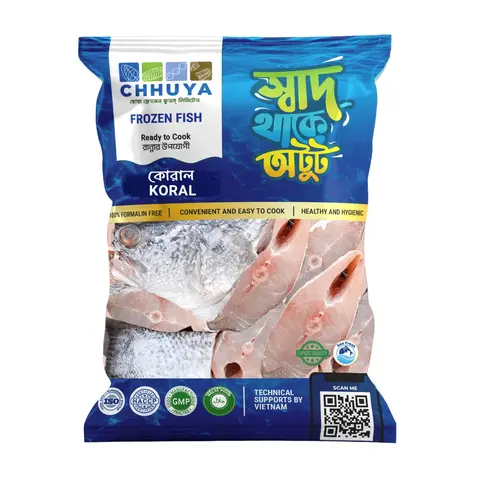
Chhuya Koral Slice 500gm
Chhuya

Chhuya Koral Slice 500gm

Chhuya Koral Slice 500gm (Readymade proccess fish for easy cooking)

SKU: 7376Weight: 0.5 kg
Price:BDT 650
Status: In Stock !!

Choose quantity

1
Total priceBDT 650

Similar type of products

Description :

Koral is the fish you order rather than cook. It's on the menu at every decent restaurant in Dhaka — fried in a light batter, grilled with lemon, or in a thick kalia — and it's the one people order because they know it will be good. Firm, white, meaty, with a clean mild flavour and almost nothing in the way of bones. The reason it stays a restaurant fish is that a whole koral is a serious purchase, and cutting one down at home is not a casual job. Chhuya Koral Slice takes that out of the equation: 500g of cross-cut steaks, frozen, ready to cook. What makes koral worth the price: At BDT 1,300 per kilo, this is the most expensive fish in the Chhuya range. What you're buying is a combination nothing else in the catalogue offers. It's firm. Properly firm — koral holds together under a grill, in a hot pan, on a skewer. Katla would break, pangash would collapse. This is the only fish in the range you can sear and serve as a piece rather than in a gravy. It's mild and lean. Clean-tasting, low in oil, without the earthy note pond-raised carp sometimes carries — koral is a brackish-water fish, which is part of why it tastes the way it does. It's nearly boneless in a slice. A koral steak has a central bone and very little else to work around. Firm, mild and clean is exactly the profile that works across cuisines, which is why this fish appears on Bengali, Chinese and continental menus alike. Cooking it the Bengali way: Koral fry — the restaurant classic. Turmeric, chilli, a light coating, shallow-fried until golden. Koral paturi — wrapped in banana leaf with mustard paste and steamed. Koral's firmness makes it ideal for this; a softer fish falls apart in the parcel. Koral kalia — a rich gravy with browned onion and garam masala, and the slices keep their shape through it. A light jhol — with potato and green chilli, when you want something plainer. Cooking it every other way This is where koral separates itself from the rest of the range. Pan-sear it in butter with garlic and finish with lemon. Grill it with olive oil, salt and pepper. Bake it with tomatoes and herbs. Cut it into cubes for skewers. Use it in a Thai-style curry or a Chinese sweet-and-sour. Make fish steaks and serve them with vegetables rather than rice. Every one of those needs a fish that won't disintegrate, and koral is the one in this catalogue that won't. Getting it right in the pan: Koral is forgiving compared with the soft fish in this range, but two things still matter. Dry the slices thoroughly before they meet heat — this is what gives you a browned surface rather than a steamed one. Don't over-cook it. Koral is lean, so there's less fat to keep it moist than in a katla. Cook until the flesh turns opaque and comes away from the bone, then stop. For a slice of standard thickness that's roughly four to five minutes a side in a hot pan. Storing and thawing: Keep the pack at -18°C. Move it to the refrigerator the night before you cook and let it thaw slowly — this is the method that costs you least in texture, and with a fish at this price it's worth the planning. If you're short of time, keep the pack sealed and stand it in cold water, changing the water every twenty to thirty minutes. Avoid warm water entirely. Pat the slices dry before cooking, use them within a day of thawing, and don't refreeze. Buying it: Choose your quantity, set a delivery location and pay through a secure method at checkout. Into the freezer as soon as it arrives.

Frequently Asked Questions

Yes. Koral is the Bengali name for the fish known internationally as barramundi or Asian sea bass. Restaurant menus in Bangladesh use all three, sometimes on the same page, which causes some confusion — but it's one fish. If you've enjoyed barramundi abroad, this is what you were eating.

Partly the fish, partly the demand. Koral is a large brackish-water species that doesn't come to market in the volumes farmed carp does, and restaurant and hotel buyers compete for supply, which holds the price up. At roughly BDT 1,300 per kilo it sits above gulsha at about BDT 1,078 and tengra at BDT 1,000. What you get for the difference is a fish that can be cooked in ways none of the others can.

It matters more than it sounds. Pangash is soft, so it suits frying, cutlets and anything battered, and at BDT 550 per kilo it's excellent value for that. Koral is firm, which means you can grill it, sear it, skewer it or steam it in a parcel and serve it as a whole piece. If the fish is going into a gravy or a batter, pangash does the job for less. If the fish is meant to be the thing on the plate, koral is what you want.

No, and that's one of its selling points. The earthy note that pond-raised carp sometimes carries doesn't apply here — koral comes from brackish water and has a clean, mild flavour with low oil content. It needs no salt-and-turmeric treatment before cooking, unlike rui or katla.

es, and it's the main reason to buy this over anything else in the range. Koral's flesh is dense enough to hold together on a grill or in a hot pan without breaking, which is unusual among the fish sold here. Dry the slices well, get the pan properly hot, and leave them undisturbed until it's time to turn once

A koral slice has a substantial central bone and very little beyond it, so it's among the easiest fish in this range to eat after the fillets. For children it's a good option, though the boneless pangash or tilapia fillets remove the question entirely and cost considerably less.

Both are sold in Bangladesh, and the page doesn't specify. Farmed barramundi has become common and is generally milder; wild-caught tends to be firmer and more expensive. At this price point either is plausible. Ask Metromart Online support on WhatsApp (01805552413) or Messenger if it matters for what you're cooking.

No count is published, and it depends on cutting thickness — koral slices are usually thick and meaty, so expect roughly two. As a main course served as steaks with vegetables, that's two portions. Stretched into a curry with rice and dal, it covers three.

Koral fry. It's the version most people already know from restaurants, it's difficult to get wrong, and it shows the fish off — firm flesh, crisp surface, clean flavour. Once you've done that, paturi is the one worth graduating to, since koral's firmness is what makes that dish work.