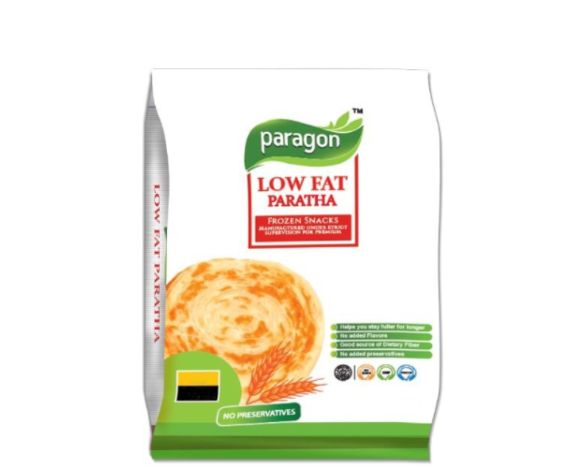
Paragon Low Fat Paratha 1200gm
The lighter paratha. 1200gm, cooked from frozen
Choose quantity
Similar type of products
Description :
Paratha is not a light food, and that's usually the point. The layers come from fat, and the fat is what makes it flaky, rich and satisfying.
𝐏𝐚𝐫𝐚𝐠𝐨𝐧 𝐋𝐨𝐰 𝐅𝐚𝐭 𝐏𝐚𝐫𝐚𝐭𝐡𝐚 is the version for households that want paratha more often than a rich one allows. Same convenience, same three minutes on a tawa, made with less fat than the standard line.
𝐒𝐢𝐳𝐞 𝐚𝐧𝐝 𝐩𝐫𝐢𝐜𝐞
𝐒𝐢𝐳𝐞: 1200gm
𝐏𝐫𝐢𝐜𝐞: BDT 275
𝐓𝐲𝐩𝐞: Frozen reduced-fat paratha
𝐁𝐫𝐚𝐧𝐝: Paragon, made by Paragon Agro Ltd.
𝐖𝐡𝐚𝐭 "𝐥𝐨𝐰 𝐟𝐚𝐭" 𝐦𝐞𝐚𝐧𝐬 𝐢𝐧 𝐩𝐫𝐚𝐜𝐭𝐢𝐜𝐞
Worth being straight about the trade-off, because it's a real one.
Fat is what creates the layers in a paratha. Reduce it and you get a lighter, less rich result — one that doesn't flake apart quite as dramatically as the standard version, and that's closer in character to a thick roti than to a restaurant paratha.
Whether that's a good trade depends on why you're buying. If paratha is a weekend treat, buy the regular one and enjoy it properly. If it's on the table three or four mornings a week and you'd rather it weren't quite so heavy, this is the version that makes that reasonable.
𝐅𝐨𝐫 𝐭𝐡𝐞 𝐚𝐜𝐭𝐮𝐚𝐥 𝐟𝐢𝐠𝐮𝐫𝐞𝐬, 𝐫𝐞𝐚𝐝 𝐭𝐡𝐞 𝐩𝐚𝐜𝐤. The nutrition panel carries the fat content per serving, and if you're managing fat intake for a specific reason, that number and your doctor's or dietitian's advice are what should decide it — not a description on a retail page.
𝐂𝐨𝐨𝐤𝐢𝐧𝐠 𝐭𝐡𝐞𝐦
From frozen, always. Thawed paratha goes limp and the layers stick together.
Heat a tawa over medium heat, put the paratha on dry, and let it start to lift — about a minute. Add a small amount of oil or ghee around the edge if you want colour, turn once, and give the second side a similar time.
𝐆𝐨 𝐞𝐚𝐬𝐢𝐞𝐫 𝐨𝐧 𝐭𝐡𝐞 𝐡𝐞𝐚𝐭 𝐭𝐡𝐚𝐧 𝐲𝐨𝐮 𝐰𝐨𝐮𝐥𝐝 𝐰𝐢𝐭𝐡 𝐚 𝐫𝐞𝐠𝐮𝐥𝐚𝐫 𝐩𝐚𝐫𝐚𝐭𝐡𝐚. There's less fat in the dough to keep it moist, so it dries out faster on a hot pan. Medium heat and two to three minutes a side is the safe approach.
𝐃𝐨𝐧'𝐭 𝐩𝐫𝐞𝐬𝐬 𝐢𝐭 𝐟𝐥𝐚𝐭. Pressing compacts whatever layers there are, and with a lower-fat dough you have fewer to spare.
Clap it between your palms while it's still hot, straight off the pan, to open what layers there are. It won't fluff like a full-fat paratha, but it makes a noticeable difference.
𝐇𝐨𝐰 𝐟𝐚𝐫 𝐚 𝐩𝐚𝐜𝐤 𝐠𝐨𝐞𝐬
A 1200gm pack at roughly 60g per piece is around twenty parathas — four or five family breakfasts, or two to three weeks of single servings. It's the size to buy if paratha is a routine rather than an occasion.
𝐖𝐡𝐚𝐭 𝐭𝐨 𝐬𝐞𝐫𝐯𝐞 𝐰𝐢𝐭𝐡 𝐢𝐭
Dal and a fried egg for breakfast, or alongside a chicken or vegetable curry. A lighter paratha actually suits a richer curry rather well, since the meal balances out.
𝐒𝐭𝐨𝐫𝐚𝐠𝐞:
Keep frozen at -𝟏𝟖°𝐂 𝐨𝐫 𝐛𝐞𝐥𝐨𝐰 — Paragon's standard instruction across their frozen range. With a pack this size you'll be opening it repeatedly, so press the air out and reseal it properly each time, or split it into smaller bags when it arrives.
Don't refreeze anything that has fully thawed. Check the date on the pack when it arrives.
𝐌𝐚𝐝𝐞 𝐭𝐨 𝐬𝐭𝐚𝐧𝐝𝐚𝐫𝐝
Paragon Agro Ltd. produce under 𝐈𝐒𝐎 𝟐𝟐𝟎𝟎𝟎, 𝐇𝐀𝐂𝐂𝐏 𝐚𝐧𝐝 𝐆𝐌𝐏 𝐜𝐞𝐫𝐭𝐢𝐟𝐢𝐜𝐚𝐭𝐢𝐨𝐧, and their products are 𝟏𝟎𝟎% 𝐡𝐚𝐥𝐚𝐥.
Frequently Asked Questions
A 1200gm pack at BDT 275. Paragon's range lists low fat paratha in 10 and 20-piece packs, so at this weight it's almost certainly 20 pieces — around four or five family breakfasts. Check the pack to confirm the count.
The page doesn't publish a nutrition panel, which it should for a product sold on this basis. The figure is printed on the pack. If you're reducing fat for a medical reason, work from that number and from your doctor or a registered dietitian rather than from a product description.
Less fat in the dough, which is what creates a paratha's layers. So this one is lighter and less rich, and it doesn't flake apart as dramatically — closer in character to a thick roti than to a restaurant paratha. The convenience and cooking method are identical.
Different rather than worse, and worth knowing before you buy. Fat carries flavour and creates flakiness, so a reduced-fat paratha is plainer. If paratha is an occasional treat, the standard version is the one to enjoy properly. If it's a weekday routine you'd like to be a bit lighter, this is the sensible trade.
Mostly the same, with one adjustment: keep the heat a little lower. There's less fat in the dough to keep it moist, so it dries out faster on a hot pan. Medium heat, two to three minutes a side, and don't press it with a spatula.
Clap it between your palms the moment it comes off the pan, while it's still almost too hot to hold — or gather it in a cloth and crush it gently. It won't fluff like a full-fat paratha, because there are fewer layers to open, but it makes a clear difference. Do it hot; once it cools it sets.
No. Cook from frozen every time. Thawed parathas go limp, stick together, and tear when you separate them.
One or two for an adult alongside dal, curry or egg; one for a child. A 1200gm pack covers a family of four for four or five breakfasts.
It contains less fat than the standard paratha — that's a difference in composition, not a health claim. Whether it's the right choice for you depends on your whole diet, and on advice from a doctor or dietitian if you're managing a specific condition. The nutrition panel on the pack is the place to start.
The listing doesn't publish an ingredients list. Check the printed pack for the full declaration, including allergens, or ask Metromart support on WhatsApp (01805552413).
Yes. Paragon Agro Ltd. produce under ISO 22000, HACCP and GMP certification with 100% halal certification. The marks appear on the packaging.