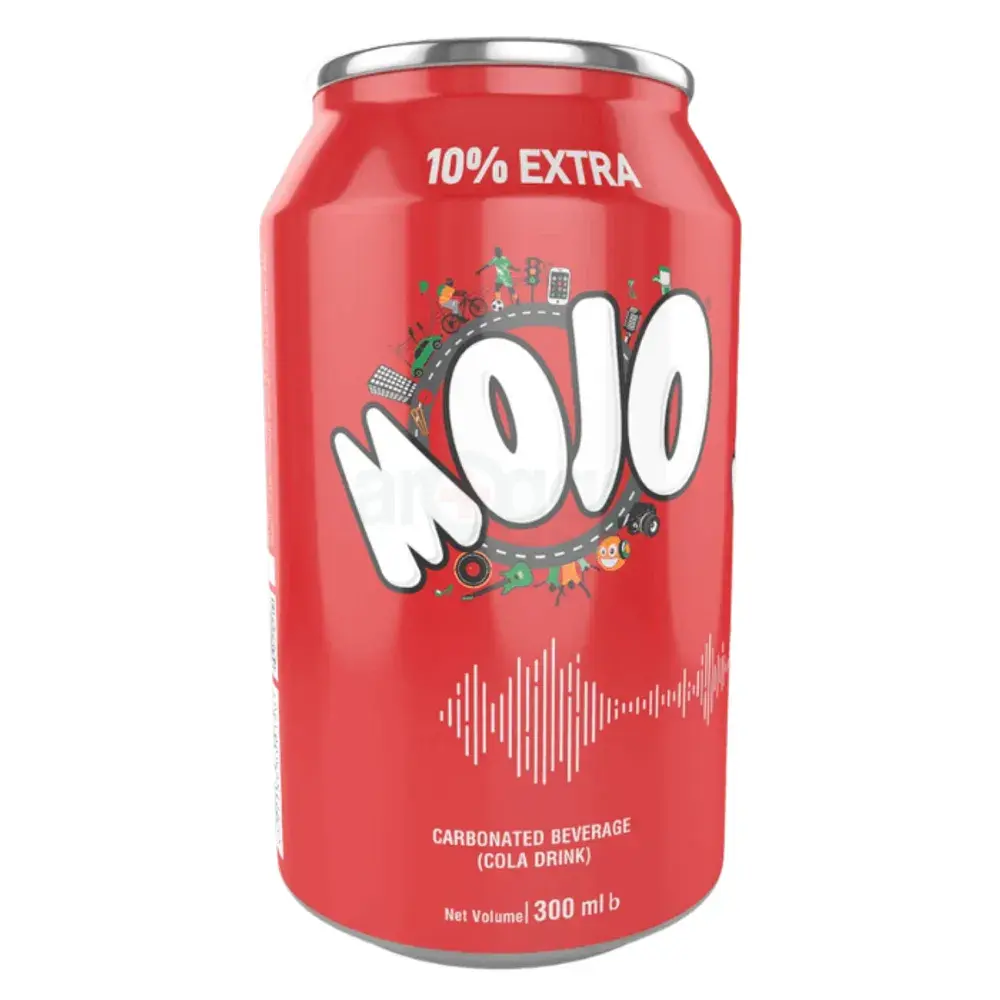
Bangladesh’s bold cola refreshment in a convenient can! Enjoy the familiar fizzy cola taste of MOJO, a homegrown Bangladeshi beverage brand from Akij Food & Beverage.
Choose quantity
Bring a refreshing cola moment to your day with MOJO Cola Can 300ml, a carbonated soft drink from Akij Food & Beverage. Known for its presence in Bangladesh’s beverage market, MOJO offers a familiar cola experience with lively fizz in a convenient can format. Whether you're taking a break at work, enjoying your favourite snacks, or having a meal with friends, this 300ml can is a handy option for individual refreshment.
Enjoy MOJO, a locally established cola brand from Akij Food & Beverage.
A fizzy cola soft drink suited to everyday refreshment occasions.
A portable, single-serving format for enjoying on the go or alongside a meal.
Size: 300ml aluminium can
Type: Carbonated cola soft drink
Brand: Mojo, a product of Akij Food & Beverage
Ice takes up more space than you might expect.
Three or four ice cubes in a regular glass take up a big chunk of its space—often more than a third once they’re packed in.
So when you pour a 250ml can over ice, it fills most of the glass but leaves a little gap at the top, which can feel disappointing.
A 300ml can fills the glass completely. That's why this size exists, and it only matters if you drink cola with ice—which is pretty common in this climate.
Without ice, the difference isn't as noticeable: both sizes are single servings, and 250ml is already enough to drink straight from the can.
The 300ml size is better for when you're having it with a glass and some food.
It's worth knowing because it's a real advantage, not just a marketing trick.
Carbonation is carbon dioxide dissolved under pressure, and it escapes through any opening it can find. A PET bottle is a bit porous—gas slowly leaks out through the plastic over time as it sits on a shelf.
Aluminium is completely airtight.
Nothing can escape or enter, so a can that's been in storage for months is just as fizzy as the day it was made.A bottle of the same age just won't be the same.
Aluminium also blocks all light, unlike clear or tinted plastic, which lets some light through.
Light can damage the taste of the drink over time, which is why a bottled drink in a bright display can taste flat compared to one from the back of a cool store.
That's a common question, and there are two parts to the answer—one real, one more about perception. The real reason favours the can.
Because it keeps carbonation better and blocks all light, a can is often fresher than a bottle of the same age.If anything, cola from a can should taste better.
The perceptual part is about the rim. When you drink straight from a can, your nose is very close to the aluminium, and smell plays a bigger role in taste than most people realize.What people think is a metallic taste is usually just a metallic smell from being so close.
There’s also a common misunderstanding that needs clearing up. The drink doesn’t actually touch the aluminium—beverage cans have a thin polymer lining inside to keep the contents and metal separate.The can is just a container, not an ingredient.
Pour it into a glass and the effect goes away completely. That’s the fix.
Cans cool faster than bottles because aluminium conducts heat better than plastic and is thinner.
Here are the fastest methods:
Ice water with salt — takes about ten to fifteen minutes.
Mix a spoon of salt into a bowl of ice and water, and put the can in. This works better than anything else because the water touches all sides of the can, where air in a freezer only touches it poorly. Salt lowers the freezing point of the water, so the bath gets colder than regular ice water.
Freezer — takes around twenty minutes, but keep an eye on it.
It works, but never leave a can in and forget about it.As the liquid freezes, it expands, and a sealed can has nowhere to go.A cracked can in the freezer can be a real nuisance.
Fridge — takes an hour or more from room temperature.
It’s fine if you’re planning ahead, but not helpful if you’re not.
Why cold matters beyond just preference: carbon dioxide stays in cold liquid and leaves warm liquid. A warm cola is losing its fizz as you drink it, and it also tastes sweeter—your perception of sweetness increases as the drink warms up to body temperature.
Cold cola is sharper and more fizzy, while warm cola is flatter and sweeter.
Everyone has an opinion about this, but most of them don’t really help.
Tapping the side of the can is mostly a myth.
The idea is that tapping helps free bubbles stuck on the sides, and there's a little truth to that— but the effect is small and not enough to make a shaken can safe to open.
Shaking pushes gas out of the liquid and forms bubbles.If you leave it alone, that gas slowly goes back into the drink.Five minutes makes a big difference; fifteen minutes makes it almost safe to open. If you can't wait, open it slowly.
Just crack the tab enough to let some gas escape, wait a second, then open fully.Letting the pressure out slowly instead of all at once makes the difference between a soft hiss and a strong spray.
And if you can, chill it first — cold liquid holds gas better, so a cold shaken can settles faster than a warm one.
It takes about thirty seconds if you're serving it to someone.
Tilt the glass and pour the drink down the side, then straighten it up as it fills.
Pouring straight into the bottom of a glass can knock out the fizz and make a lot of foam that quickly disappears.
Pour over ice instead of adding ice later.
Putting ice into a poured drink causes a sudden burst of bubbles because the ice helps the gas form — and you end up with less fizz and sometimes even lose some of the drink from the top of the glass.
Fill the glass with ice first, then pour the drink in.
It goes in slower and steadier, less foam, and the drink gets colder as it's poured.
Mojo's caramel flavor and smooth sweetness pairs well with burgers, barbecue, grilled meats, pizza, and anything smoky — the sweetness contrasts nicely with the char.
Cola doesn't work as well with heavily spiced food, because its sweetness sits on top of the heat instead of balancing it.
A citrus drink does a better job.For a group of people, having one of each type covers more flavors than having two of the same.
Keep it cool, dry, and out of direct sunlight.
Unopened cans last longer — aluminum helps protect the drink from light and keeps the gas inside, which is why canned drinks stay good longer than bottled ones.
Check the date on the bottom when you get the order, and store the cans in a stable place, not somewhere that changes between hot and cold.
Aluminium is among the most valuable materials to recycle and is widely collected here — it holds real scrap value, which is why cans get picked up rather than landfilled.
Rinse it and keep it out of wet waste. A rinsed can is worth collecting; one that's been sitting in food waste often isn't.
Choose your quantity, set a delivery location and pay at checkout. Message support for case rates on party and office orders.
Briefly, and don't forget it. Liquid expands as it freezes and a sealed can has nowhere to give, so a can left in there will split. Fifteen to twenty minutes is plenty. Salted ice water is faster anyway and carries no risk.
It's a 300ml aluminium can. The price is BDT 54, reduced from a regular BDT 60 — a 10% saving. One can is a single serving, comfortably a full glass over ice.
Fifty millilitres more drink, which is the difference between most of a glass and a full one once ice is in it. The 250ml can is BDT 40 if you want the smaller serving or the lower price; this one is the better fit alongside a meal.
Aluminium is dearer to produce and ship than PET, and the format carries a convenience premium — it chills far faster and needs no cap. What you're paying for is a single cold serving ready when you want it. Bottles are the cheaper route if you're stocking the fridge rather than drinking now.
Fifteen minutes or so in ice water with a spoon of salt stirred in, which beats the freezer because the water contacts the whole can. Aluminium conducts heat far better than plastic, so a can of this size is drinkable long before a bottle holding the same amount.
Yes — same formulation from the same producer. Any difference you notice comes from temperature and carbonation, which is where the can has the advantage, not from the recipe.
Neither is published on this page, which is a gap. For reference, Mojo is listed at roughly 10.6 g of sugar per 100ml on the 500ml and 250ml can pages, which would put a 300ml can near 32 g. Read the printed can for the actual figures. Mojo Zero is the no-sugar alternative if you're avoiding sugar.
Case quantities aren't listed. Set a higher quantity at checkout or message Metromart support on WhatsApp (01805552413) or Messenger for case rates.

MOJO Cola Regular Pet 1L

MOJO Cola Regular Can 250ml

MOJO Cola Regular Pet 500ml

Mojo Zero 250ml
MOJO Cola Regular 250ml
ACI Electrolyte Drinks Lemon 250ml
Fizzo Apple malt 250 ml

Clemon Pet 1Litre

Rooh Afza 300ml

Clemon Zero Can 250ml

Farm Fresh Laban 250ml

Shake Kheer 250ml

