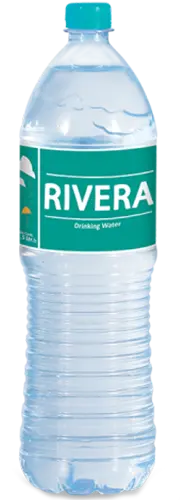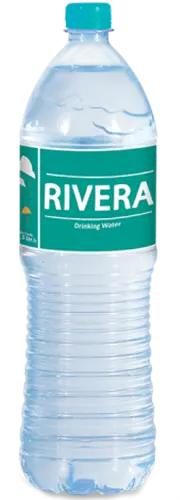

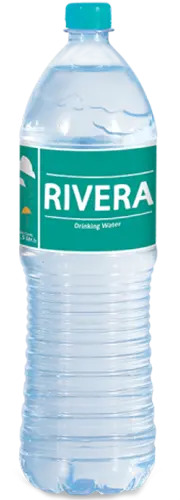
Rivera Drinking Water 1.5L
A litre and a half of drinking water — the best value of the three Rivera sizes.
Choose quantity
Similar type of products
Description :
Bottled water is the least interesting thing anyone buys and the one most often bought wrong — the wrong size for the occasion, left in the sun, or refilled until it shouldn't be.
None of which matters much until you're drinking warm water out of a bottle that's been in a car since Tuesday.
Which size suits what:
Rivera comes in three, and they're genuinely for different things.
500ml is the carry size — a bag, a pocket, a short journey. Finished in one go, which is what a single-use bottle is designed for.
1 litre suits a desk or a day out, where you'll come back to it over a few hours.
1.5 litres is the one for a table, a car, or a household getting through water steadily. It's also the best value of the three, which is the main argument for it.
The practical rule: buy small to carry, large to keep. A 1.5L bottle in a bag is heavy and awkward; a 500ml on a dinner table runs out immediately.
What it costs per litre:
Working the three sizes out:
- 500ml — about 30 a litre
- 1 litre — about 30 a litre
- 1.5 litres — about 23 a litre
So the 500ml and the 1 litre cost the same per litre, and the 1.5L is roughly a fifth cheaper than both.
That's a properly graded ladder at the top, and it means there's no value reason to buy a 1 litre over a 1.5 — only a practical one, if the larger bottle won't fit where you need it.
For regular household use, ordering 1.5L bottles by the case is the sensible approach.
Keeping it cold:
Water takes longer to chill than most drinks because of how much heat it holds, so a 1.5L bottle needs three to four hours in a fridge from room temperature.
The partial-freeze trick works well at this size. Pour off a little, freeze the bottle most of the way overnight, and it thaws gradually through the day — giving you cold water for hours rather than the twenty minutes a chilled bottle manages in a hot car.
Don't freeze a full sealed bottle. Water expands as it freezes and a full PET bottle will deform or split at the seam. Leave a few centimetres of headspace.
Where not to store it:
Not in a car. This is the one worth changing. A closed car in Dhaka sun reaches temperatures well above anything a bottle is designed for, and prolonged heat affects both the plastic and the taste of the water. A bottle that's spent a week on a dashboard tastes noticeably of plastic.
Not in direct sunlight. Same reason, more slowly.
Cool, shaded, and out of the way is all it needs. Sealed bottles keep for a long time stored properly — the date on the bottle is about the packaging and the storage rather than the water itself.
Why single-use bottles shouldn't be refilled
Worth knowing, because almost everyone does it at least once.
The problem isn't the plastic leaching — that concern is mostly overstated for ordinary use. The problem is the neck and the threads.
Every time you drink from a bottle, bacteria from your mouth transfer to the rim and the screw thread. In a bottle you finish and discard, that's irrelevant. In one refilled and carried around in the warmth for days, those surfaces are difficult to clean properly and they don't dry between uses.
Single-use bottles are also not built for repeated washing. The plastic is thinner than a reusable bottle's, it scratches easily, and scratches hold bacteria.
If you want a bottle to refill, buy one made for it — thicker plastic or steel, a wide enough neck to actually clean, and designed to be washed. For a one-off refill on a journey, nobody's coming to any harm; it's the habit over weeks that isn't ideal.
Drinking enough in the heat:
General rather than medical, but worth stating.
You need more water here than in a cooler climate, and considerably more on a day spent outdoors or commuting. Thirst lags behind need, so waiting until you feel thirsty means you're already behind.
Sip steadily rather than drinking a lot at once — a large volume at one go largely passes through rather than being absorbed.
A rough guide most people can use: pale urine suggests you're drinking enough; dark suggests you aren't. For anything beyond general guidance — a medical condition, a medication, or symptoms that concern you — speak to a doctor rather than a product page.
Recycling the bottle:
PET is widely collected and holds genuine scrap value, which is why bottles get picked up rather than landfilled here.
Rinse it, squash it flat, and keep the cap on. Flattening saves space in collection, and caps are frequently lost in sorting when they're removed.
Frequently Asked Questions
The 1.5 litre, at roughly 23 a litre against about 30 for both the 500ml and the 1 litre. The two smaller sizes cost the same per litre as each other.
Buy small to carry and large to keep. A 500ml suits a bag or a short journey; the 1.5L suits a table, a car or a household getting through water steadily.
Yes. Set a higher quantity at checkout, or contact support on WhatsApp (01805552413) for case rates — worth doing for households, offices and events.
Three to four hours in a fridge from room temperature. Water holds more heat than most drinks, so there's no quick route at this size.
Partially, and it's a useful trick — pour off a little, freeze it most of the way overnight, and it thaws gradually through the day. Don't freeze a full sealed bottle: water expands as it freezes and a full PET bottle will deform or split.
In a car, or anywhere in direct sunlight. A closed car in the sun gets far hotter than a bottle is designed for, and prolonged heat affects both the plastic and the taste.
Almost always heat. A bottle that's been warm for an extended period — on a dashboard, in a sunlit room — picks up a plastic note. Storing it cool and shaded prevents it.