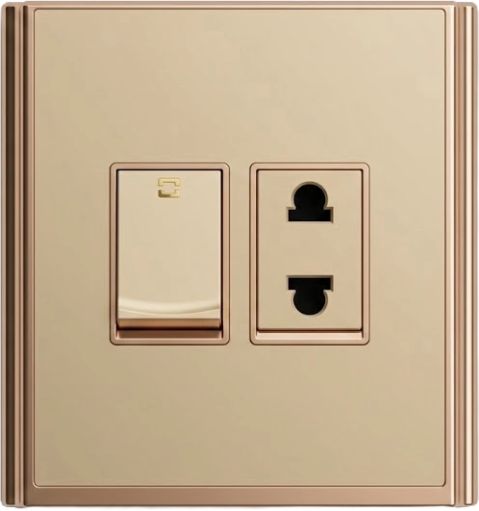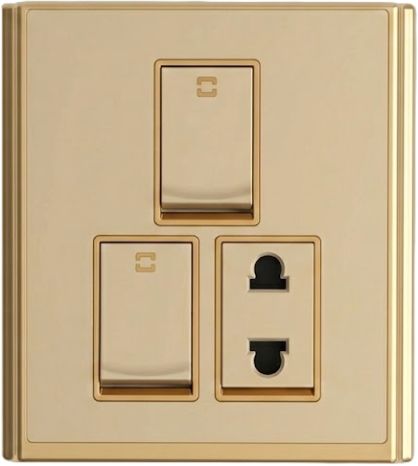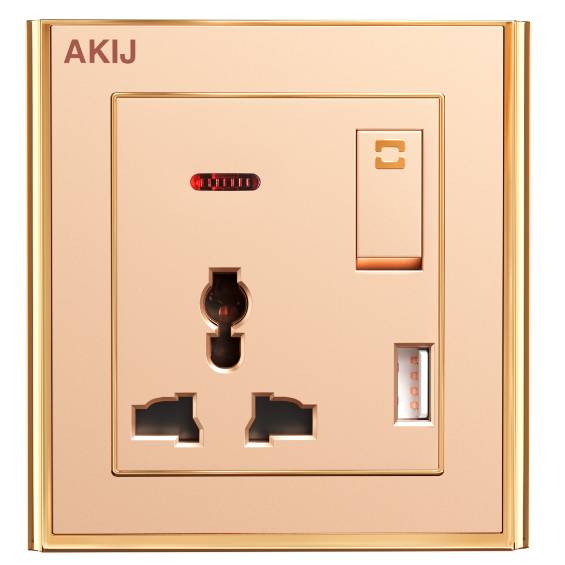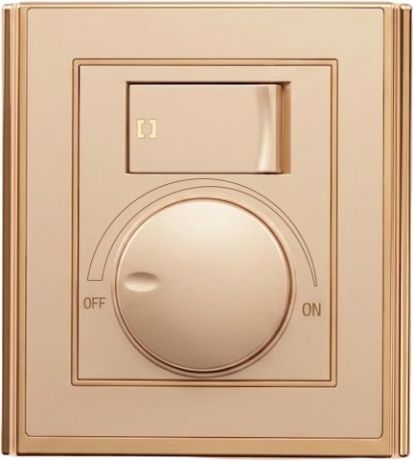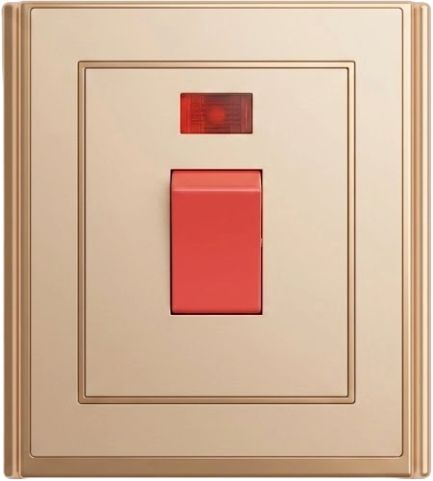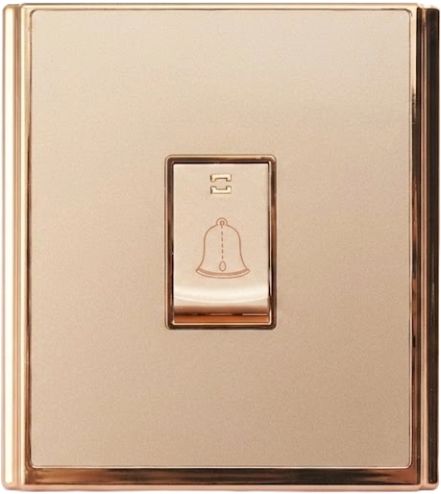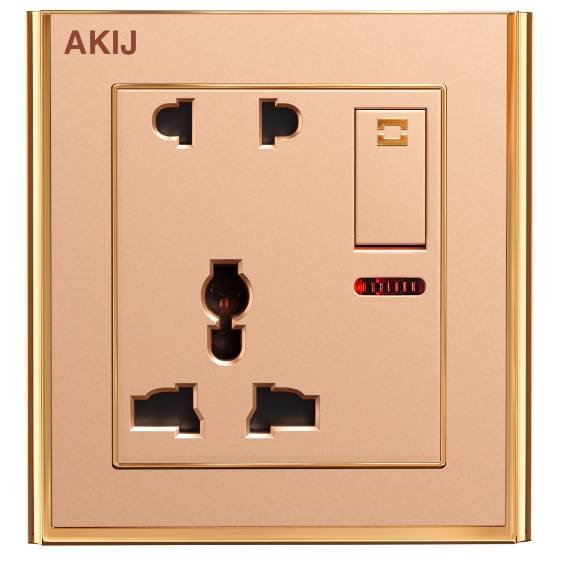
Akij Innova Multi Socket With Switch 13 A
Key Specifications: 1) Maximum Operating Voltage: 250V AC 2)Maximum Operating Current: 13A AC 3)Dimension: 86 x 95.2 mm 4)Plugging Operations exceed 10000 times
Choose quantity
Similar type of products
Description :
Most people buy a wall socket twice: once when a room is being wired, and once when an old one has stopped holding a plug properly. Either way it's a decision made quickly, usually on whatever the electrician recommends — and usually with no real idea what the numbers on the box mean.
They're worth a minute, because they determine what you can safely plug in.
What this product is:
A wall-mounted socket outlet with an integrated switch, from Akij Electricals' Innova range.
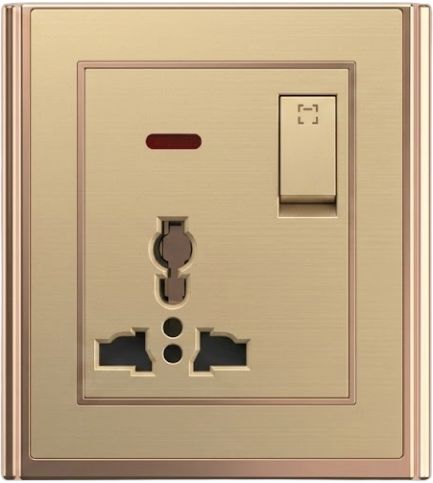
It's a multi socket, which means the outlet accepts more than one plug configuration — the flat-pin and round-pin types both common in Bangladeshi homes — rather than being fixed to a single standard. For a household running a mix of locally bought and imported appliances, that's the practical advantage over a single-standard outlet.
It is a fixed-wiring product, not a portable extension board. It mounts into a wall box and connects to the building's wiring, which means installation is electrician's work rather than a DIY job. More on that below.
What the ratings actually mean:
Three figures matter on any socket, and all three are on this one.
13A is the maximum current the socket is rated to carry. At the mains voltage used here, that corresponds to roughly 3,000 watts — enough for an iron, a kettle, a heater or a room air conditioner, individually.
250V AC is the maximum operating voltage, comfortably above the mains supply, which gives headroom for the fluctuations common on many supplies here.
86 × 95.2 mm is the faceplate size, which matters when you're replacing an existing socket rather than installing from scratch — it needs to match the wall box already in place.
A fourth figure is worth noting: The specification quotes over 10,000 plugging operations. That's a mechanical endurance rating, and it's the number that separates a socket that still grips a plug firmly after five years from one that's gone loose and warm. A loose socket is a genuine fault rather than an inconvenience.
What does the product have:
Key Features:
1) Flame Retardant, High Impact Resistance, Unbreakable Poly Carbonate (PC) Material.
2) Extensive coloring solutions & High Glossiness.
3) High Quality Metal Steel Frame.
4) High Quality silver alloy with exellent conductivity & strong elasticity.
5) Spring & Screws Salt spray tested and provide consistent contact pressure.
6) Metal parts are made of high conductive Copper alloys, Plug smooth, safe & stable
7)Electric Shock Proof Safety Shutter used
8)Used universally for all place.
9)High quality electroplating color coating
What the safety shutter does:
This is the feature most worth understanding, and the one most often overlooked.
A safety shutter is a mechanical barrier behind the socket holes. It stays closed unless the correct plug is inserted, which means the live contacts can't be reached by anything pushed into a single hole — a hairpin, a screwdriver, a child's finger.
It only opens when both pins engage together, which a plug does and a single inserted object doesn't.
If there are small children in the house, this is not an optional extra. It's the difference between a socket that's safe to leave at skirting height and one that isn't.
What "gang" means
Worth explaining, because the term appears throughout this category and means nothing outside the trade.
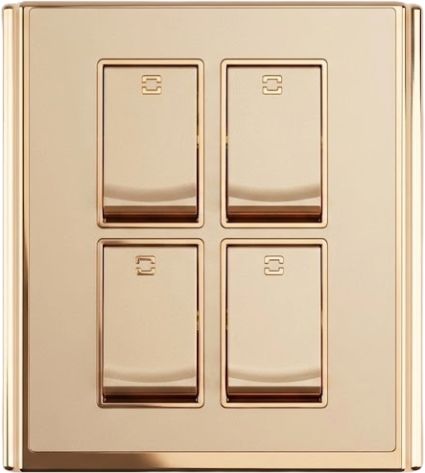
"Gang" is the number of switches or outlets on a single faceplate. A 1-gang switch has one switch; a 4-gang switch has four, controlling four separate circuits from one plate.
So when you see 4 Gang 1 Way Switch, that's four switches on one plate, each operating one circuit. "1 way" means each switch controls its circuit from that one location. "2 way" means the same circuit can be switched from two places — the arrangement used for a stairway light operated from both the top and the bottom.
For a socket, the gang count tells you how many outlets the plate carries.
Installation
This needs a qualified electrician. It isn't a cautious disclaimer — a wall socket connects directly to the building's fixed wiring, and getting the earth connection, the polarity or the circuit rating wrong creates a hazard that isn't visible once the plate is screwed back on.
Three things an electrician will check that are easy to get wrong otherwise: that the circuit's protective device is rated appropriately for the socket, that the earth is properly connected and continuous, and that the wall box is the right depth so the wiring isn't compressed behind the plate.
Always isolate the circuit at the consumer unit before any work, and treat a circuit as live until it's been tested as dead.
If you're replacing a like-for-like socket in an existing box, the job is short. That doesn't make it a job for someone without the training.
Choosing between the Akij Electricals ranges
Akij Electricals makes several series — Innova, Aura and Delight among them — and they cover broadly the same functions in different finishes and build specifications.
The practical advice when choosing: pick one series and stay with it throughout a room or a property. Switch plates and sockets from different ranges rarely match exactly in colour, finish or plate profile, and a wall with three different styles on it looks like a series of repairs rather than a decision.
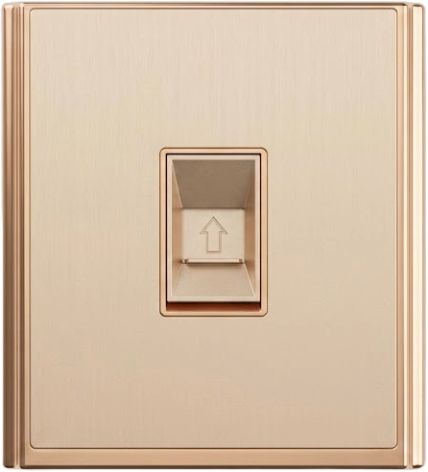
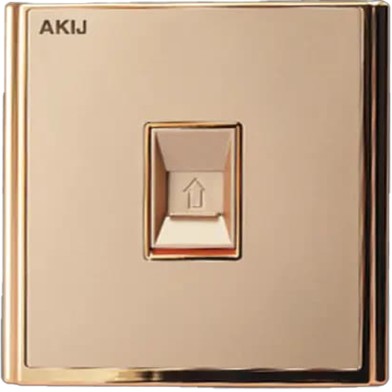
Beyond appearance, check the current rating matches what the circuit is for, and whether you need the extra functions some plates carry — USB outlets, TV, telephone or data sockets are all available in these ranges.
Looking after a socket
A socket that's getting warm needs attention, not tolerance. Warmth at the faceplate means a poor connection somewhere — a loose terminal, a worn contact, or a plug that no longer fits tightly. It's a fault and it needs an electrician.
Don't force a plug that doesn't fit. Multi-standard sockets accept several plug types, but forcing a plug that isn't engaging properly damages the contacts and causes exactly the loose-fit problem the endurance rating is meant to prevent.
Clean with a dry cloth only, with the circuit isolated if you're doing anything more than wiping the surface. Nothing wet, ever.
Replace a socket that's cracked, discoloured, scorched, or no longer gripping plugs firmly. All four are signs of a problem rather than cosmetic wear.
Frequently Asked Questions
A socket outlet that accepts more than one plug configuration — the flat-pin and round-pin types both common here — rather than being fixed to a single standard. Useful in a household running a mix of locally bought and imported appliances.
Any appliance drawing within the socket's rating, provided the circuit behind it is suitable. Whether a particular circuit can support a particular appliance is a question for your electrician rather than the socket alone.
A wall socket. It mounts into a wall box and connects to the building's fixed wiring, so it needs installing by an electrician rather than plugging in.
Thirteen amps is the maximum current the socket is rated to carry. At the mains voltage used here that corresponds to roughly 3,000 watts — enough for an iron, a kettle, a heater or a room air conditioner individually.
A mechanical barrier behind the socket holes that stays closed unless a proper plug is inserted. It only opens when both pins engage together, so a single object pushed into one hole can't reach the live contacts. With small children in the house it's the feature that matters most.
The number of switches or outlets on a single faceplate. A 1-gang switch has one switch, a 4-gang has four controlling four separate circuits. 1 way means the circuit is switched from that one location; 2 way means it can be switched from two, as with a stairway light.
A mechanical endurance rating — how many times a plug can be inserted and removed before the contacts lose their grip. It's the difference between a socket that still holds a plug firmly after years of use and one that's gone loose.