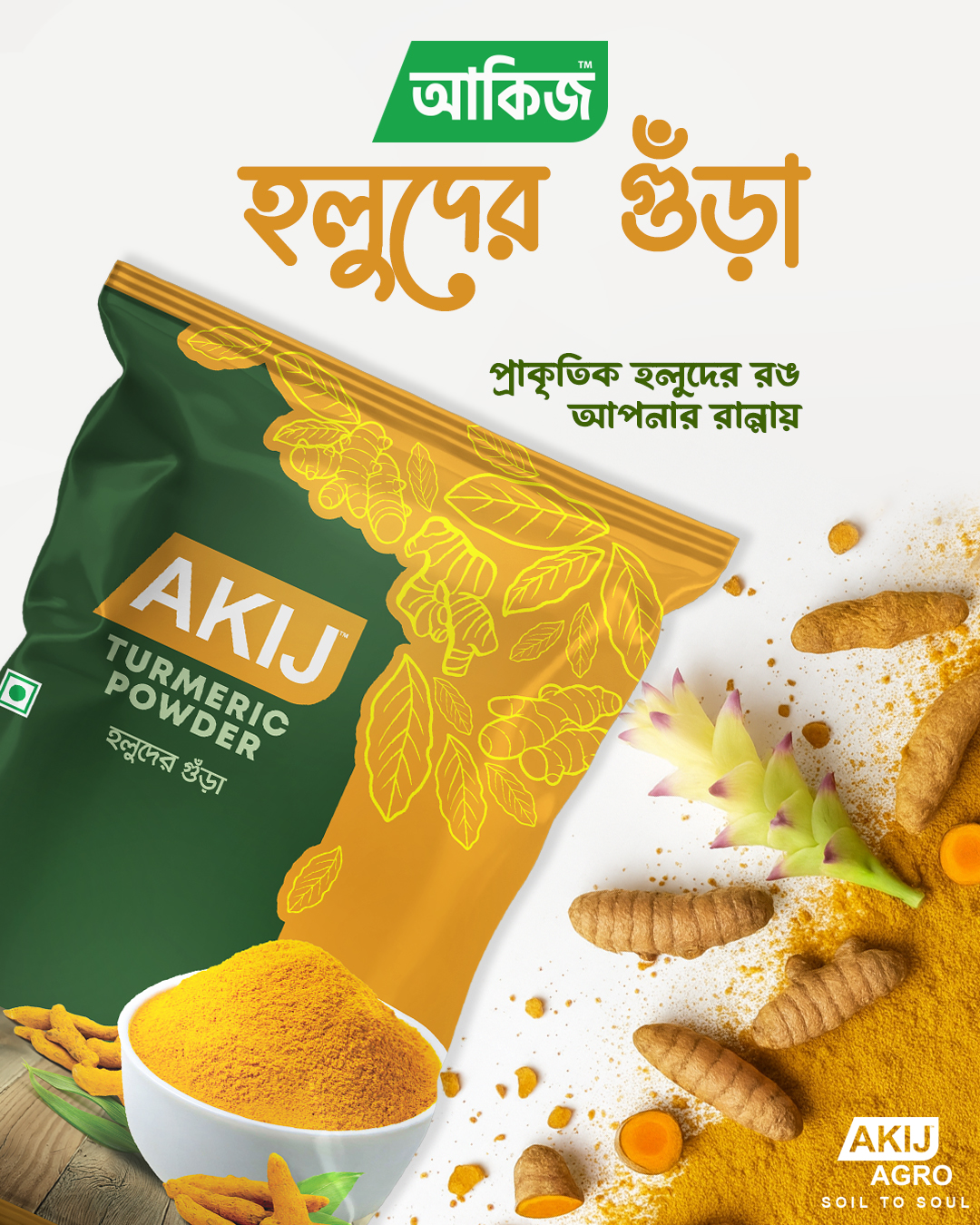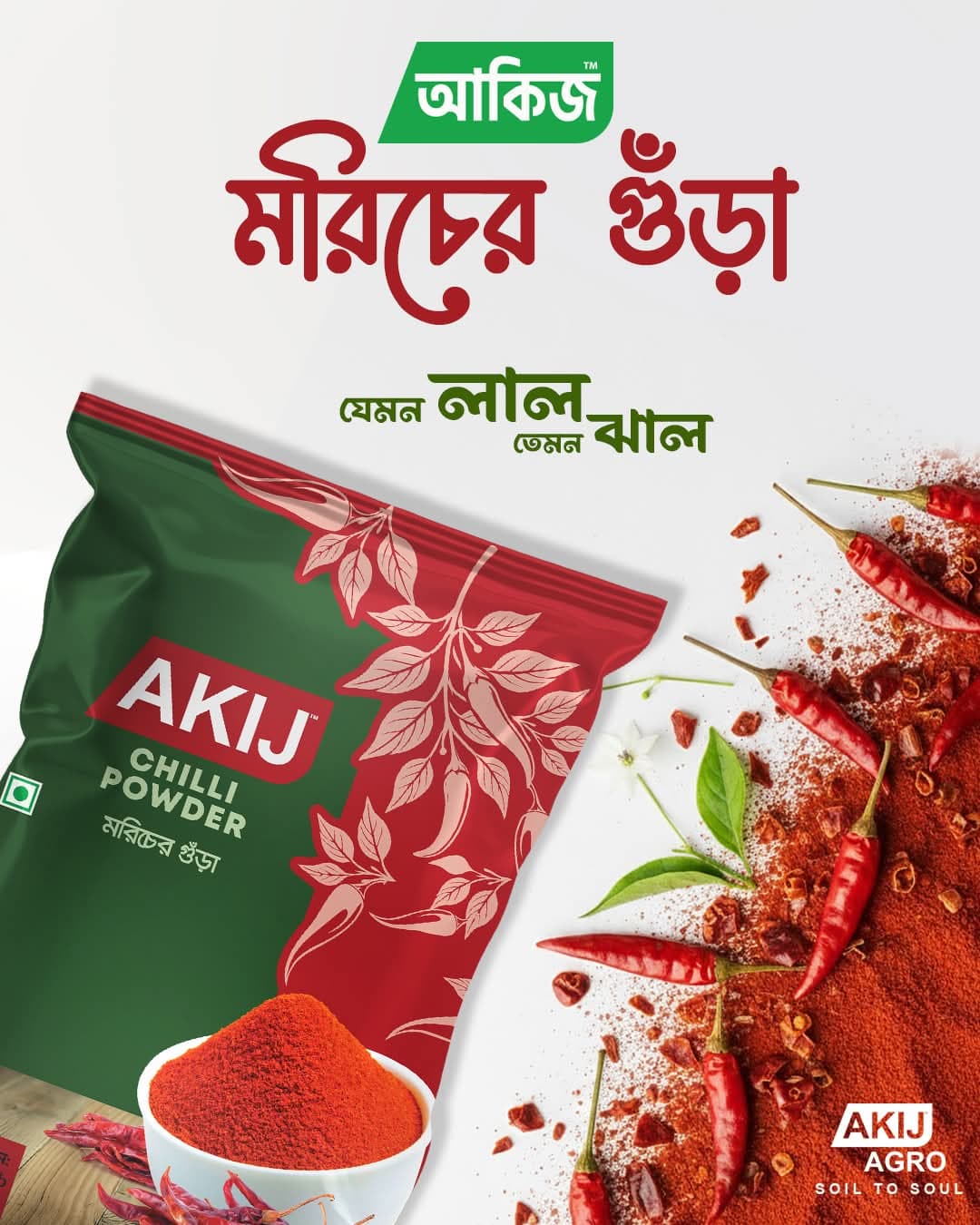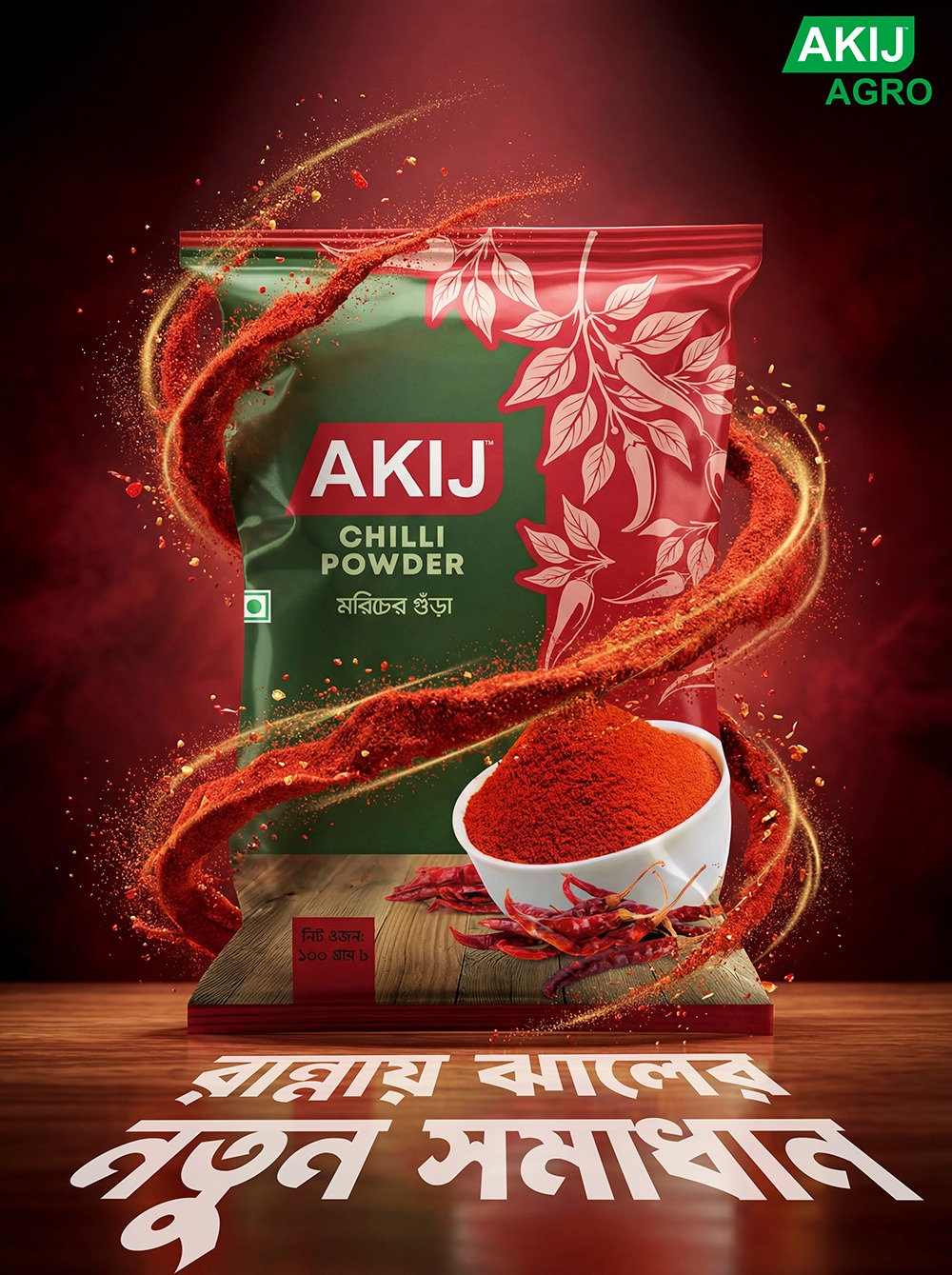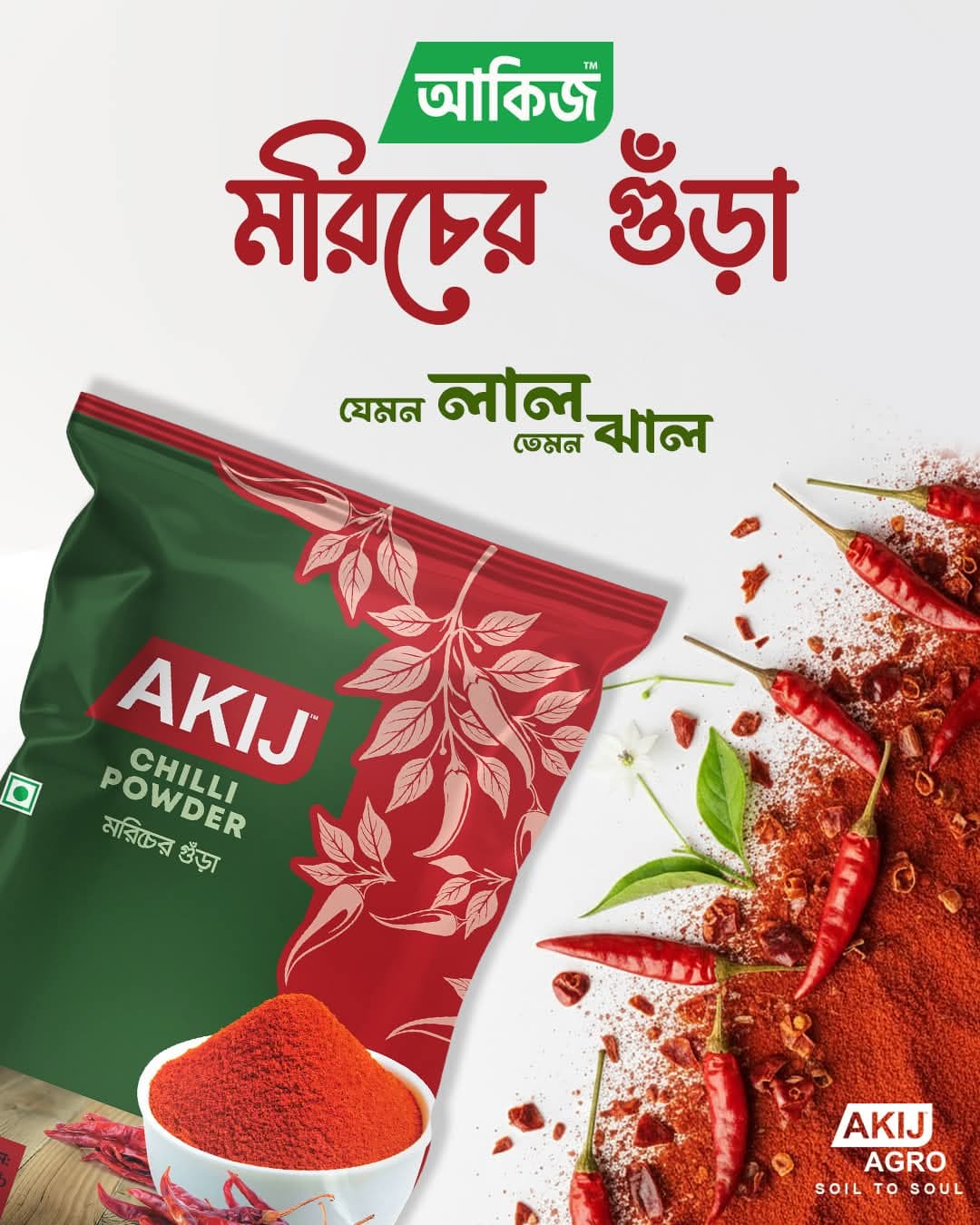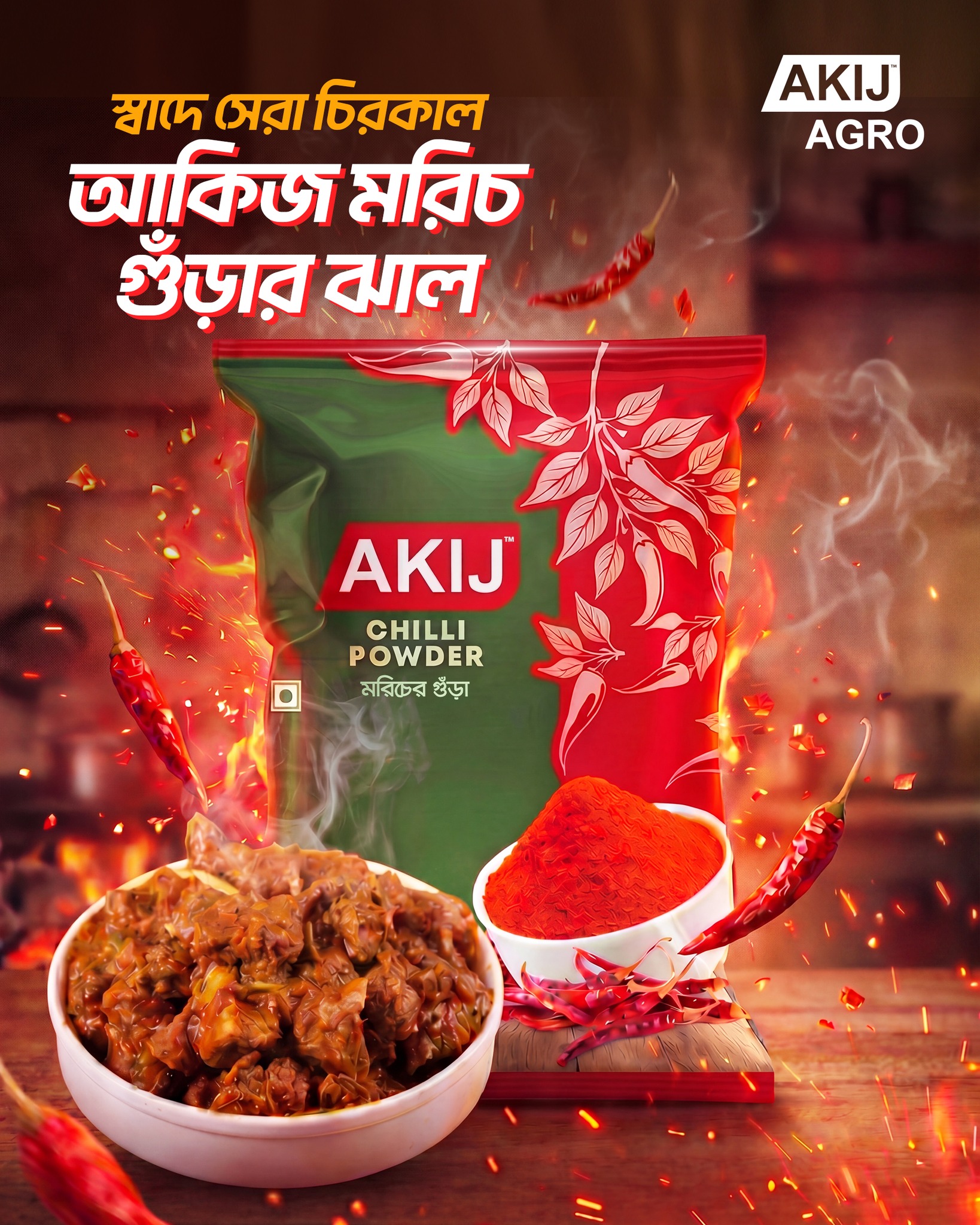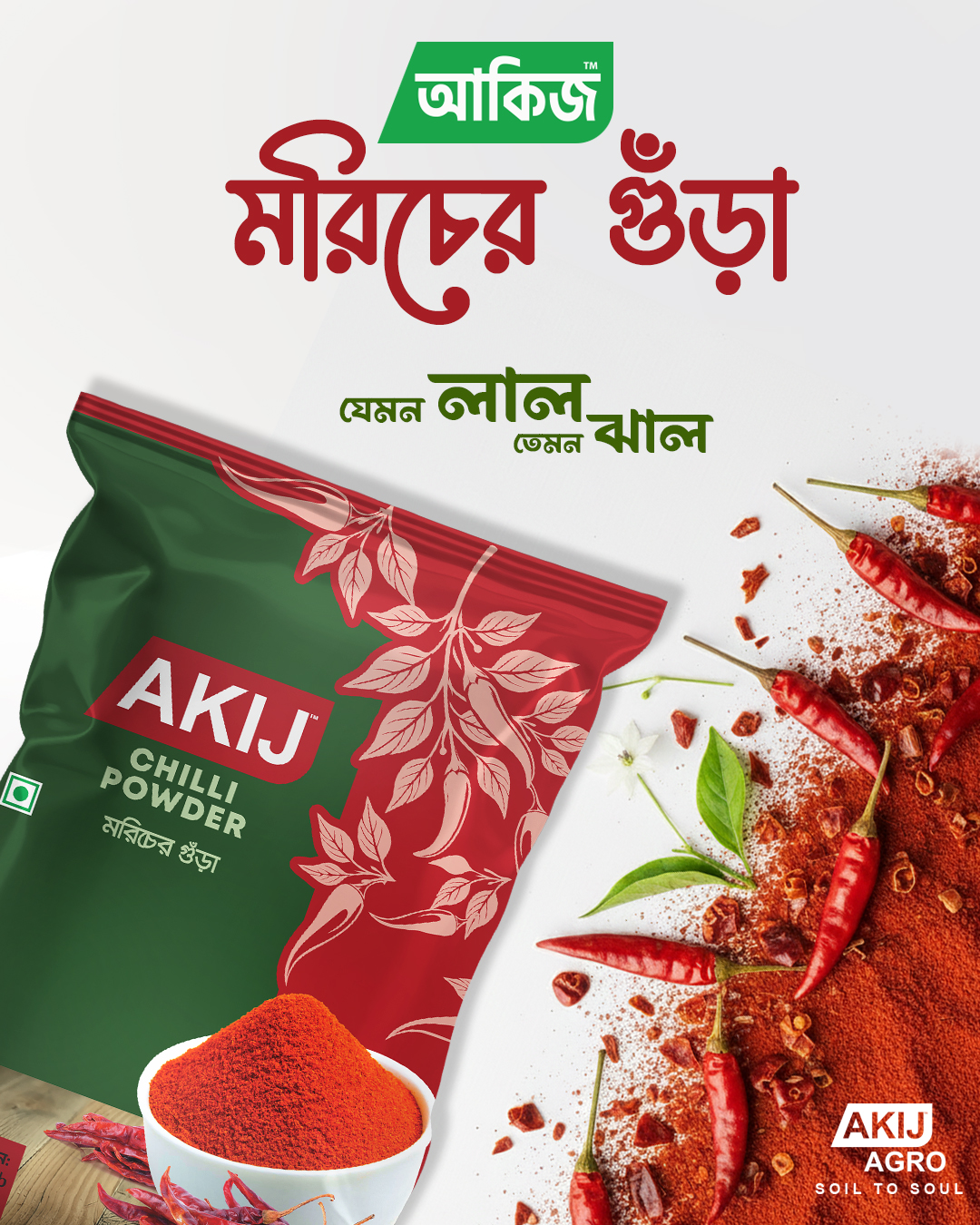

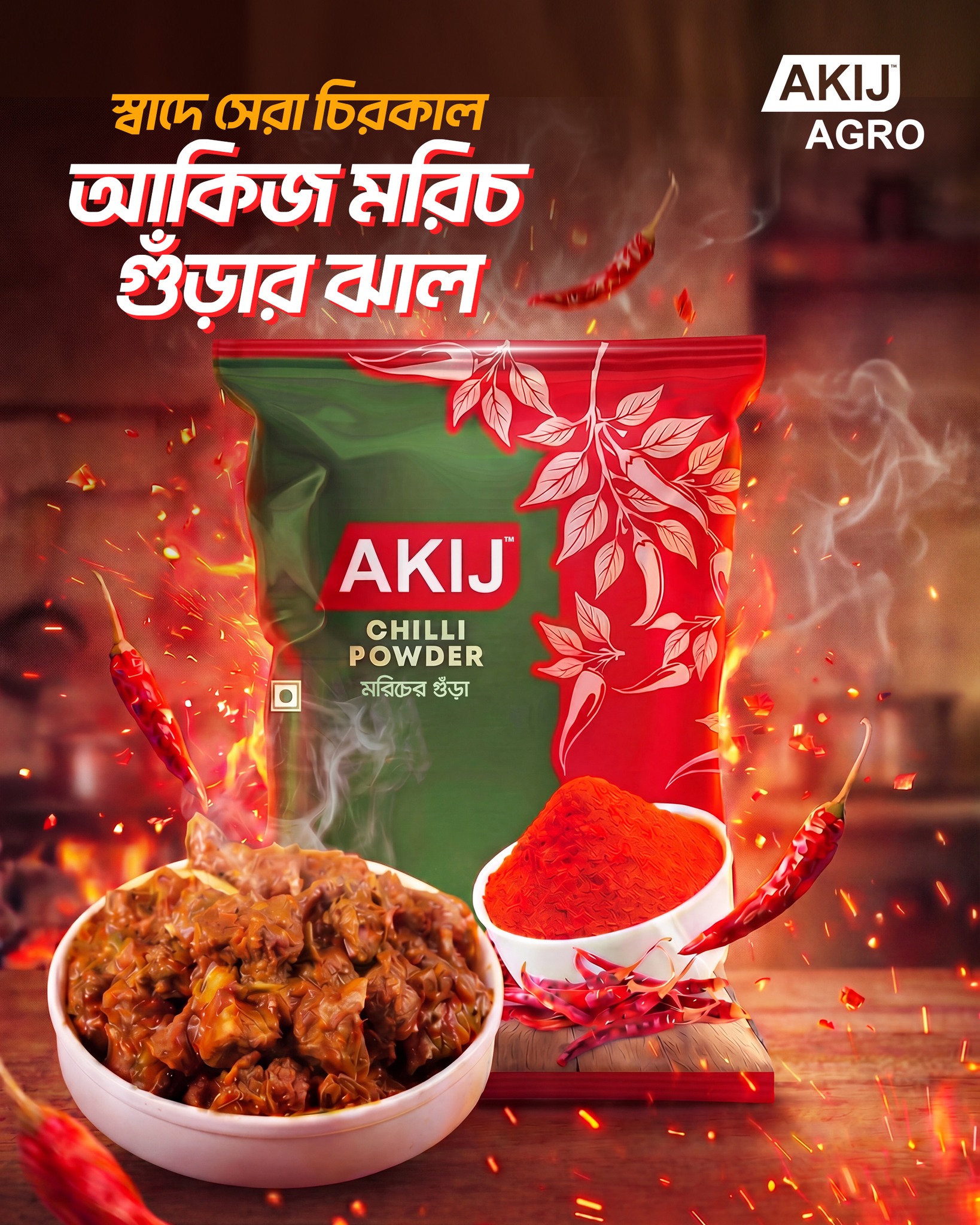
Akij Chilli Powder — 50gm
50gm of pure chilli powder — the size where the price per kilo drops sharply.
Choose quantity
Similar type of products
Description :
Every spice range has one size where the price genuinely drops, and in this one it's the 50gm. Not the 500gm, not the kilo — the jump from a sachet to a small jar is where the saving actually happens, and after that the curve flattens out almost entirely.
Most people work up the range gradually and never notice.
What 50gm actually covers:
Ground chilli powder is light — a level teaspoon weighs roughly 2.5 grams. So 50gm is around twenty teaspoons.
At one to two teaspoons for a curry serving four, that's ten to twenty dishes, or somewhere between a few weeks and a couple of months for most households.
That matters more than it sounds, because it lands neatly inside the window where ground spice stays at its best — roughly six months from opening. A 50gm jar gets used while it's still sharp. A half-kilo pack in the same kitchen would be losing character long before the bottom.
Why that window matters:
Ground spices don't spoil so much as fade. Chilli powder is at its peak for around six months after opening and noticeably flatter after a year — it stays safe, it just stops tasting of much, and you compensate by using more.
So the honest way to compare sizes isn't purely price per kilo. It's price per kilo of spice you actually use while it's good. A large pack that goes dull halfway through costs more in practice than a smaller one finished fresh.
For a household cooking with chilli most days, the larger packs win comfortably. For everyone else, the 50gm is the size that balances the two.
What "pure" means on a spice pack:
A pure ground spice is the spice and nothing else — no bulking agents, no added colouring, no anti-caking additives.
That's worth stating because ground spices are among the harder foods to assess by eye. Once something is a fine red powder, appearance tells you very little about what's in it.
A sealed pack from a named manufacturer gives you three things loose spice from an open sack doesn't: a batch code, a date, and a company answerable for the contents. Akij Agro produces this under its own brand.
It's a more modest claim than organic — it's about what isn't in the pack rather than how the chilli was grown — but it's the one that holds up.
How much to use:
For a curry serving four: one to two teaspoons for a mild dish, two to three for a properly spiced one. Bangladeshi cooking generally sits at the higher end.
Add it gradually. You can always add more, and there's no taking it out. And taste after it has cooked rather than before — raw chilli powder tastes harsh and dusty, and changes considerably once it's been through oil and heat.
When to add chilli in cooking:
Timing changes the result more than quantity does.
Early, in the oil with the onions and other spices, chilli powder releases its colour and its deeper, rounder heat into the base. This is what gives a gravy its colour, and it's the standard approach for a curry.
Late, near the end, it stays sharper and sits on top of the dish rather than blending in — useful for adjusting heat without rebuilding the base.
Never on a dry, very hot pan alone. Chilli powder scorches within seconds, and burnt chilli turns acrid in a way that can't be corrected. If the oil is smoking, take the pan off the heat before the powder goes in.
Why blooming spices in oil matters:
Many of the flavour and colour compounds in ground spices are fat-soluble rather than water-soluble. Heating them briefly in oil — the tadka step — releases those compounds into the fat, which then carries them through the whole dish.
Stirring the same quantity straight into a watery gravy extracts considerably less. That's why a curry with the spices bloomed at the start tastes deeper than one where they went in later, with identical amounts of everything.
Twenty to thirty seconds in warm oil is enough. Longer and you're into burning territory.
Storing ground spice:
Four things degrade it: air, light, heat and moisture.
Transfer it to an airtight jar — glass or steel rather than the pack it came in, which lets air in every time it's opened.
Keep it dark. Light breaks down the compounds that give chilli powder its red, which is why a jar on a sunny shelf fades within weeks.
Keep it away from the stove. The instinct is to store spices within reach of the cooking. That's the worst place, since heat and steam both shorten their life.
Never dip a wet spoon in. Moisture causes clumping and, eventually, mould. Dry spoon, every time.
A 50gm jar is small enough to keep in one container without decanting, which is one fewer thing to manage than a large pack.
How long it stays good:
Go by the date on the pack for safety, but for flavour the window is roughly six months from opening.
The test is smell. Fresh chilli powder smells sharp and distinctly of chilli when you open the jar. If it smells of very little, it's past its useful life regardless of what the date says.
The rest of the range:
Akij Agro covers chilli powder in 15gm, 100gm, 200gm, 500gm and 1000gm, with turmeric and coriander in comparable sets.
Most households settle on two sizes eventually — a jar in daily use and a larger pack sealed away — which captures the bulk price without the staleness. If you're buying one, this is the size to buy.
Frequently Asked Questions
The 50gm is the best-balanced size in the range for most households. It captures the biggest single price drop — about a quarter off the per-kilo rate compared with the 15gm sachet — without the staleness risk of a half-kilo pack.
Yes, but the savings flatten quickly. The 15gm to 50gm step cuts about 26% off the per-kilo price. Every step after that saves under 8%, and some under 4%. The kilo pack is about 15% cheaper per kilo than this one.
Storage. Ground spice fades within roughly six months of opening, so a kilo pack in a household that cooks with chilli occasionally is losing character long before it's finished. The saving only counts on spice you use while it's still good.
A level teaspoon of chilli powder weighs about 2.5 grams, so 50gm is roughly twenty teaspoons — around ten to twenty curries depending on how heavily you spice.
Many flavour and colour compounds in ground spices are fat-soluble, so brief heating in oil releases them into the fat, which carries them through the dish. Stirring into a watery gravy extracts far less.
Add something fatty or starchy — yoghurt, cream, coconut milk, extra potato — or increase the other ingredients. Sugar and acid balance heat rather than removing it.
It's sold as pure ground chilli — the spice and nothing else, with no bulking agents or added colouring. Check the printed pack for the full declaration
A sealed pack from a named manufacturer carries a batch code, a date and a company answerable for the contents. Ground spices are difficult to assess by eye, and loose spice sold by weight offers no traceability.
Yes. Set higher quantities at checkout, or contact support on WhatsApp (01805552413) for bulk rates — though for chilli powder specifically, check the per-kilo prices first, since the larger single packs may work out better than multiple small ones.