Choose quantity
Similar type of products
Description :
Most people who try a zero-sugar cola do it once, decide it isn't quite the same, and go back to the original. Some try it, adjust over a few weeks, and never return. Mojo Zero is for the second group — and at BDT 50 for a single bottle, it's a cheap enough experiment to find out which you are.
How sweeteners work, and why so little is used — they're hundreds of times sweeter than sugar by weight, so grams of sugar get replaced by milligrams of sweetener. That's why sweeteners sit near the end of an ingredient list while sugar sits near the top in the regular version. It also explains the texture difference properly: sweetness has been replaced, the physical bulk hasn't.
Zero, diet and light are not interchangeable — zero and no sugar generally mean none added, while light sometimes means reduced rather than none. These are brand terms rather than uniformly regulated definitions, so the nutrition panel is the reliable answer.
Switching over without giving up in week one — drink it properly cold, start with citrus if cola feels too different, and give it a few bottles rather than a few sips.
Why an older zero drink tastes flat — the most useful of the five. Aspartame degrades slowly and faster in heat, losing sweetness as it does. So a zero drink stored warm or kept past its date tastes sharper and flatter than a fresh one. Sugar doesn't behave that way, which is why the regular version is more forgiving of a hot storeroom. That explains something people usually blame on the product.l
The sugar-free version of Mojo
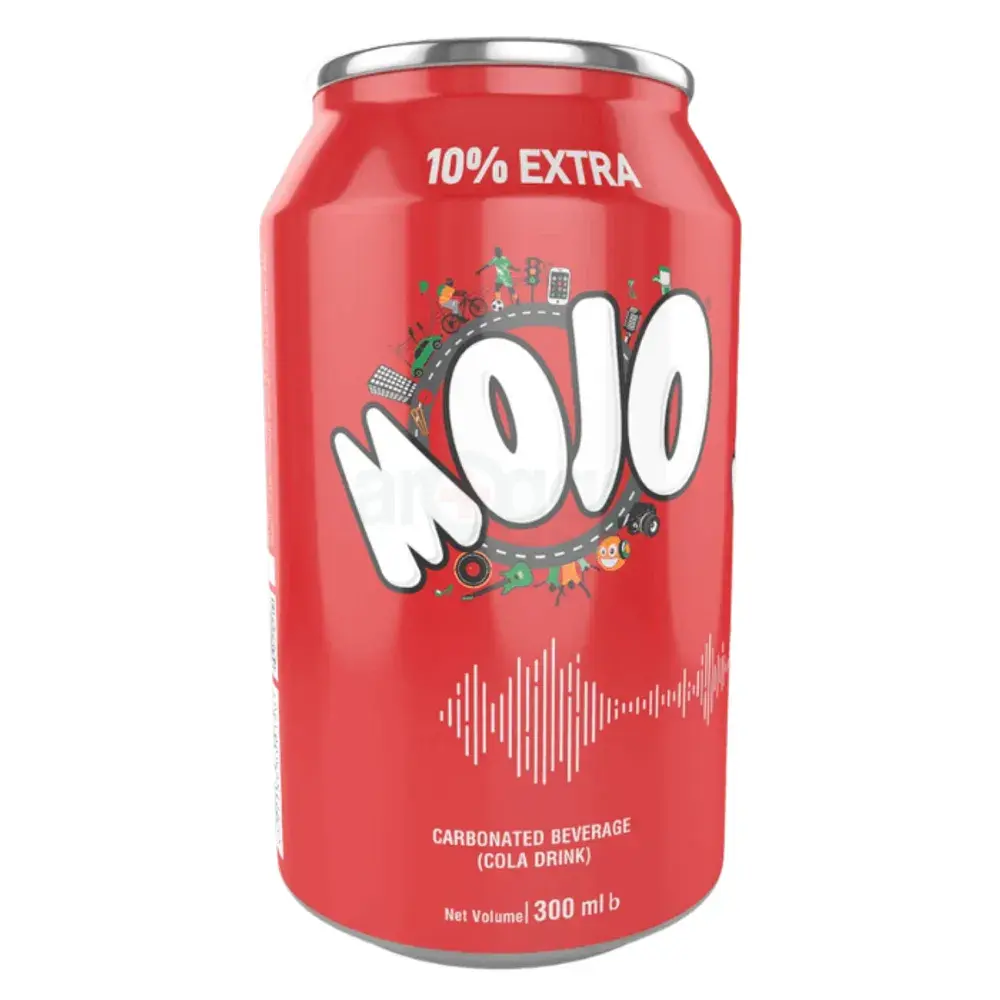
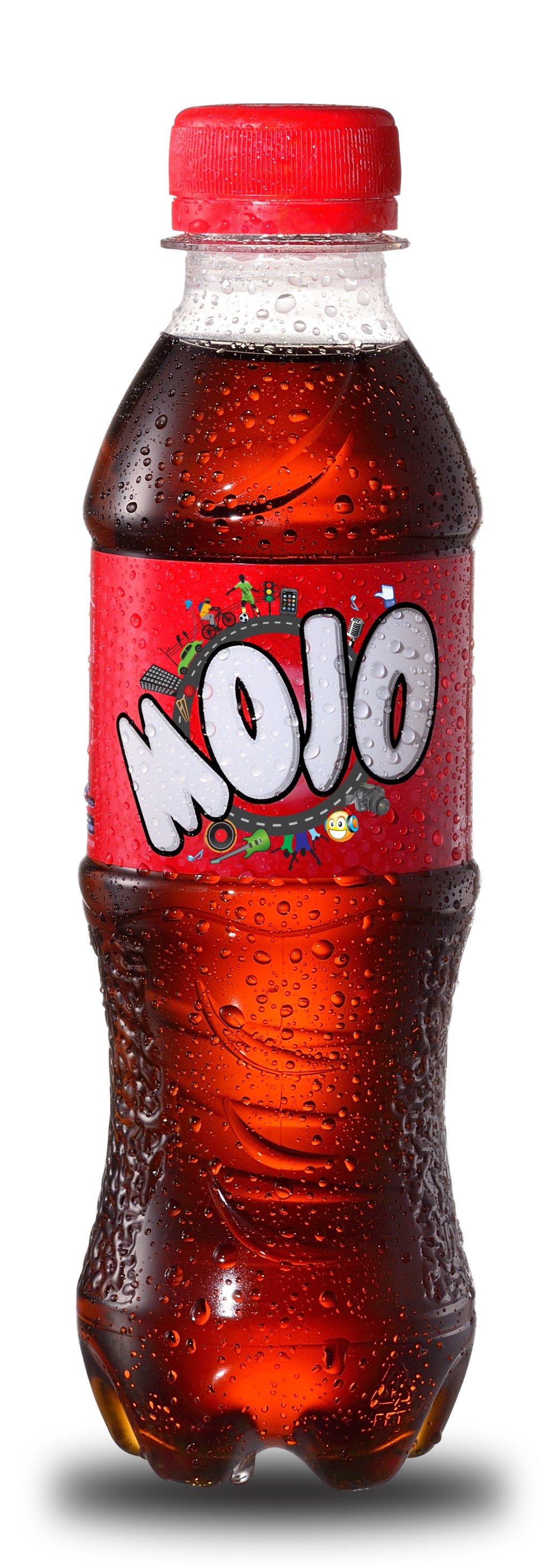
Mojo Zero is the no-sugar version of Akij Food & Beverage's cola. Same dark, sharp, heavily carbonated idea, with the sugar replaced by sweeteners.
It sits alongside Clemon Zero in the sugar-free line, both at the same price point, and it's the option for anyone cutting sugar out of soft drinks without giving them up entirely.
What removing the sugar actually changes
Sugar does two jobs in a cola. The obvious one is sweetness. The less obvious one is body — sugar gives the drink weight on the palate and a slightly syrupy finish that sweeteners don't replicate.
Take it out, and what's left is lighter and finishes faster. The cola character is still there — the acidity, the carbonation, the way it cuts through fried food — but the texture is different.
To put a figure on what's removed: regular Mojo carries roughly 10.6g of sugar per 100ml, which works out at about 26.5g in a 250ml bottle — somewhere around six teaspoons. Mojo Zero replaces that.
Being straight about the taste
This does not taste identical to regular Mojo, and any page claiming otherwise is wasting your time. Anyone who has drunk a zero-sugar cola already knows it.
What's fair to say is that plenty of people prefer it once they've adjusted, and the adjustment usually takes a few bottles rather than a few sips. The first one tastes wrong mainly because you're comparing it to something else; by the fourth, most people stop noticing.
Worth buying one before buying a case. It's a genuine split — some people switch permanently, others never get on with it, and there's no predicting which from the outside.
The price, and why sugar-free costs more
Mojo Zero is BDT 50 for 250ml. The regular Mojo in a 250ml PET bottle is BDT 20.
That's two and a half times the price for the same volume, which surprises people who assume removing an ingredient should make something cheaper. In per-litre terms it works out at roughly BDT 200 a litre, against about BDT 80 for the regular bottle.
The reasons are consistent across the category rather than specific to Mojo. High-intensity sweeteners cost considerably more per unit of sweetness than sugar does, and zero-sugar variants sell in far smaller volumes, so the per-unit production cost is higher. Clemon Zero carries exactly the same BDT 50 price, which confirms it's the category rate rather than a markup on this product.
Who tends to buy it
People reducing sugar without giving up soft drinks. People counting calories. And a smaller group who simply came to prefer the drier finish and won't go back.
If you're managing a medical condition — blood sugar, weight under medical supervision, or any dietary restriction — the printed label and your doctor or a registered dietitian are the right sources rather than a product page. What's useful to say here is that the label carries the sweetener and nutritional detail, and that's where those decisions should start.
Mojo Zero against Clemon Zero
Both are BDT 50 for 250ml, so the choice is flavour rather than budget. But there's a practical point worth knowing beyond preference.
Citrus handles sugar removal considerably better than cola does. A lemon drink is carried by its acidity, which sweetener substitution doesn't touch. Cola leans on sugar for body as well as sweetness, so removing it changes more of what you taste.
As a result, anyone new to zero-sugar drinks generally finds Clemon Zero the easier first switch. If you specifically want cola, Mojo Zero is the one — just expect a larger gap from the sugared version than you'd get on the citrus side.
Serving it cold matters more than usual
Zero-sugar drinks are less forgiving when warm. With no sweetness to soften the acidity, a warm sugar-free cola tastes sharper and flatter than its sugared equivalent does at the same temperature.
Chill it properly, therefore, rather than merely cooling it. Roughly fifteen minutes in ice water with a spoon of salt stirred in, or twenty in a fridge. Ice water works faster than the freezer because the water contacts the whole surface.
One caution if you use the freezer: don't leave it in and forget it. Liquid expands as it freezes, and a sealed container has nowhere to give.
What the label tells you
Read the pack for the sweetener used and the nutritional figures. Sugar-free drinks typically use one or more of aspartame, acesulfame K, sucralose or stevia, and the choice matters to some people.
That's worth checking rather than assuming, for two reasons. Some people avoid particular sweeteners by preference. And products containing aspartame carry a phenylalanine declaration, which is a medical necessity for anyone with PKU.
On calories, sugar-free colas are typically very low rather than exactly zero — labelling rules in many markets permit a small amount to be declared as zero. Again, the pack has the figure.
The rest of the range
Mojo runs from 250ml up to a two-litre family bottle in the regular version, in both PET and cans. On the sugar-free side, Clemon Zero covers lemon at the same price.
Worth noting there's currently no larger sugar-free format in either brand — no 500ml, litre or two-litre zero option — so a household that switches has only the single-serve size to work with.
Frequently Asked Questions
That's what "Zero" refers to — no added sugar, with sweeteners doing the job instead. The printed label carries the exact figures and the sweetener used.
A 250ml single serve at BDT 50. That works out at roughly BDT 200 a litre, against about BDT 80 for the regular Mojo in a 250ml PET bottle.
Read the pack. Sugar-free drinks typically use aspartame, acesulfame K, sucralose or stevia, singly or in combination. It matters to some people by preference, and products containing aspartame carry a phenylalanine declaration for anyone with PKU.
Usually very low rather than exactly nil. Labelling rules in many markets allow a small amount to be declared as zero, so check the figure on the pack.
Colas generally do, and zero-sugar versions are usually comparable to their sugared counterparts. The figure is on the label.
The product name doesn't specify, which is unhelpful — Clemon's equivalent is named "Clemon Zero Can 250ml" so buyers know. Ask support on WhatsApp (01805552413) to confirm if the format matters to you.
No, and it's better to know that before you buy. Sugar contributes body as well as sweetness, so removing it leaves a lighter drink with a quicker finish. It's recognisably Mojo, but not a like-for-like swap
Most people who switch say a few bottles rather than a few sips. The first one tastes wrong largely because you're comparing it against something else. Buy one before buying several.
Clemon Zero, if you're new to sugar-free drinks. Citrus is carried by acidity, which sweetener substitution doesn't change, so the gap from the sugared version is smaller. Choose Mojo Zero if you specifically want cola.
Sweeteners cost more per unit of sweetness than sugar, and zero-sugar variants sell in much smaller volumes, which raises the cost per unit. Clemon Zero is the same BDT 50, so it's the category rate rather than a markup here.